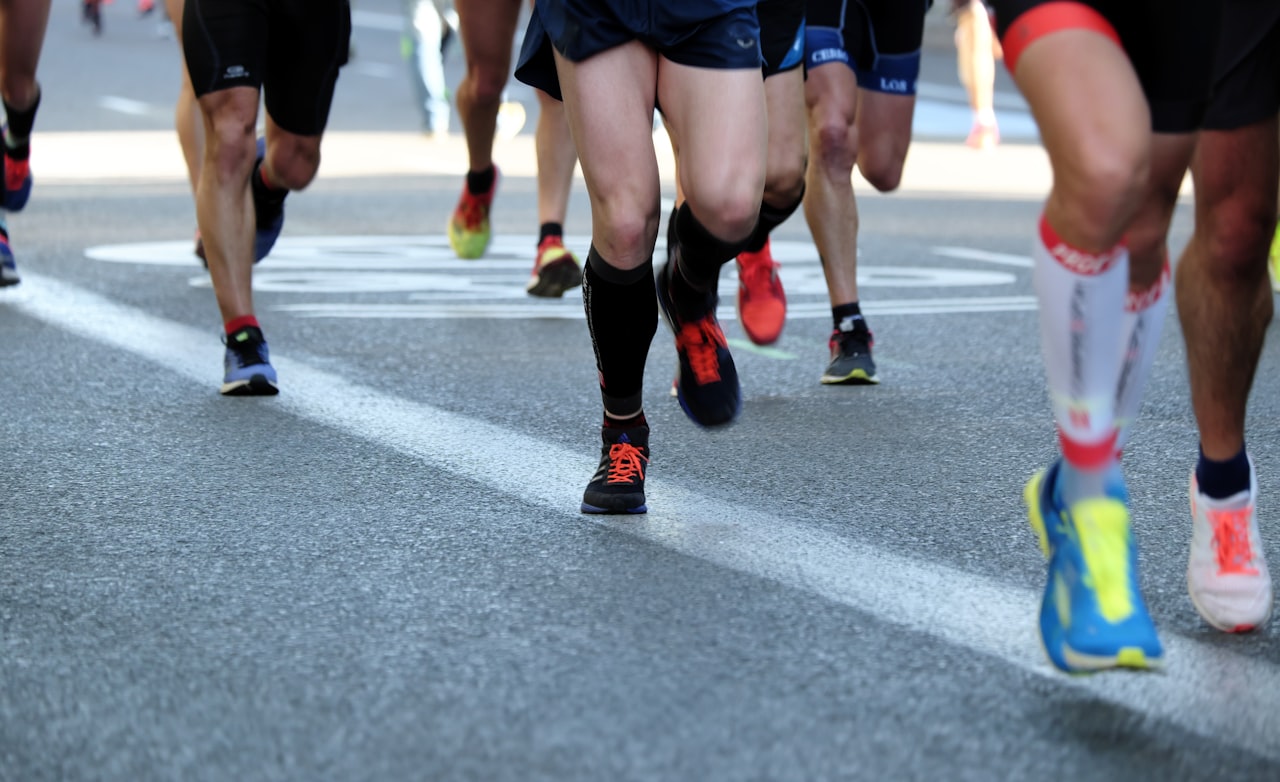
The Los Angeles Marathon is a point-to-point 26.2-mile race that starts at Dodger Stadium and finishes at Avenue of the Stars in Century City, passing through some of the city's most iconic neighborhoods along the way. The 2027 race runs on March 7 — registration is currently open.
The course is known as Stadium to the Stars. From Dodger Stadium it moves through Hollywood, West Hollywood, Beverly Hills, and into Century City. The route passes the Sunset Strip, Rodeo Drive, and the Wilshire Corridor. Spectator access is good across much of the course — Hollywood and West Hollywood sections are particularly lively with crowd support.
The race draws 25,000+ runners from over 100 countries and is one of the marquee destination marathons on the global circuit. Charity bib entries and lottery entries are available alongside standard registration.
Even if you are not running, the course-side viewing is worth experiencing — the stretch through West Hollywood near Santa Monica Blvd routinely has one of the loudest crowds on the course.
One of the six World Marathon Majors, 45,000 runners, a flat course through Chicago's most iconic neighborhoods. The Chicago Marathon is the benchmark race for runners who have qualified.
The Chicago Marathon's legendary flatness is not just a runner's selling point -- it is a spectator advantage. The course loops through neighborhoods that are genuinely Chicago: the Gold Coast, Chinatown, Pilsen, Boystown, Lincoln Park, and back to Grant Park. Local businesses set up unofficial aid stations with beer and tacos along the course. Neighborhood block parties break out spontaneously. The finish line on Columbus Drive, with the Chicago skyline as backdrop, is one of the most photographed moments in American endurance sports. 1.7 million spectators attend each year -- one of the largest sporting audiences in the country on any given day.
If you want to run a fast marathon for the first time, Chicago is the answer. The course is flat, the crowd support is relentless, and October weather is ideal for performance. Entry is through a lottery system (opens February, closes March) with charity bib options available year-round. Spectating is completely free along the entire course. The Chinatown stretch at mile 13 is worth the trip alone -- the neighborhood goes all out, every year.
Book Chicago accommodations in July at the latest -- Marathon Week hotel rates double and triple around the race. The start and finish in Grant Park is easily accessible via Red Line (Grand or Lake stops). Best spectator spots: mile 9 Boystown, mile 13 Chinatown (the neighborhood goes all out), and the final stretch on Columbus Drive. Volunteer registration opens in September and fills fast. Track runners through the official race app on race day.
The Chicago Marathon earns its place on Falkor's Nation's Best list as a city-wide civic event that turns 29 Chicago neighborhoods into a stage for human endurance. A race that draws the world's fastest marathon runners to the same course as a 72-year-old retiree completing their bucket list is a genuinely democratic cultural event. In a sport increasingly defined by exclusion, Chicago runs one of the most accessible World Majors on Earth. Entry and charity bibs at chicagomarathon.com. October 11, 2026. Start and finish: Grant Park, Chicago, IL.
Twenty-six miles through all five boroughs of New York City. The NYC Marathon is the world's largest — 55,000 runners, a million spectators, and the most complete tour of the city's actual geography that exists.
Marathon Sunday in New York City is unlike anything else in American sports culture. The city does not just host the race -- it becomes the race. From the Verrazzano-Narrows Bridge opening stretch to the final uphill push through Central Park, each borough cheers with its own distinct energy. Fort Hamilton Heights in Brooklyn, the sound tunnel of the Queensboro Bridge, First Avenue in Manhattan lined five deep, the Bronx crowd, and finally Central Park where the last mile is a wall of noise. 1.7 million spectators attend each year. This is not a race you watch from seats -- you stake a corner of a New York sidewalk and become part of the city for one morning.
If you run at all -- or ever wanted to -- the NYC Marathon is the race that rewrites what you believe is possible. The spectator experience is completely free along the entire course. For those who want to run: entry is through NYRR's lottery system (the application window opens in January). Charity bibs are available year-round through hundreds of partner organizations. The 2026 edition is the 50th running of the current course -- a milestone that will draw the world's fastest elite athletes alongside tens of thousands of first-timers.
Do not attempt to navigate New York City by car on Marathon Sunday -- road closures make the city nearly impassable. Take the subway to any borough mid-course. Best spectator spots: Brooklyn's Atlantic Avenue corridor around mile 8, First Avenue in Manhattan around mile 16 (lines five deep, incredible energy), and the finish line area at Central Park's Tavern on the Green. Download the NYC Marathon app to track a specific runner. Bring a sign -- the course is long and personalized cheering genuinely moves people.
The NYC Marathon earns its place on Falkor's Nation's Best list as the rare sporting event that does not require you to be a fan of the sport to feel something. A race that draws the world's fastest marathon runners to the same course as a 72-year-old retiree completing their bucket list is a genuinely democratic cultural event. In the 50th year of the modern course, this is a milestone worth knowing about. Race information and charity bibs at nyrr.org. November 1, 2026. Start: Fort Wadsworth, Staten Island. Finish: Central Park, Manhattan.
The Catalina Island Conservancy Trail Marathon runs across the most dramatic trail terrain accessible by ferry from the mainland — a point-to-point course across the interior of Catalina Island from Two Harbors to Avalon, crossing the island's mountains and canyons on trails maintained by the Catalina Island Conservancy that are otherwise accessible only to hikers.
The marathon distance covers approximately 26.2 miles of technical trail terrain with significant elevation gain, passing through the island's interior buffalo and bison range (yes, real buffalo), the Catalina highlands, and descending to Avalon's harbor for the finish. The island's unique ecology — shaped by isolation from the mainland for thousands of years — makes the race course unlike any mainland trail marathon.
Registration fills quickly; the race has a strong following among California trail runners who value the adventure of racing on an island accessible only by boat. Ferry transportation is included in registration. The race typically runs in November when temperatures are optimal for trail running and the island's summer tourist crowds have diminished.
Catalina Express ferry service connects from Long Beach and San Pedro to Avalon and Two Harbors — the race start is at Two Harbors with finish in Avalon. Pre-race accommodation in Two Harbors (camping or the bunkhouse) or Avalon is arranged by participants. Check the Catalina Island Conservancy website for 2026 race registration and course information.
The Surf City USA Marathon in Huntington Beach is one of the premier beach-city running events in Southern California, drawing thousands of participants each February for a flat, fast course along Pacific Coast Highway with ocean views stretching the full length. The finish line deposits runners steps from the iconic Huntington Beach Pier — one of the most photogenic race finishes in the country.
Full marathon and half marathon distances are both available. The half marathon is particularly popular for its manageable course and strong post-race scene: craft beer garden, live music on the beach, and the full HB pier plaza as celebration space. The PCH course is largely flat, making Surf City one of the faster half marathons on the Southern California circuit — a Boston qualifier for the full marathon distance. Registration opens well in advance and typically sells out before the new year. Book accommodations early if traveling; Huntington Beach hotels fill for race weekend. Check runrocknroll.com for current registration status and race weekend schedule.
The Los Angeles Marathon runs its 42nd edition in March 2027 — a 26.2-mile course through the heart of Los Angeles that passes the most iconic locations in one of the world's most distinctive cities. The LA Marathon's Stadium to the Sea course begins at Dodger Stadium and finishes at the Santa Monica Pier, covering 26 miles of LA street scenes that no car tour can replicate.
The course runs through downtown Los Angeles, Chinatown, East Hollywood, Hollywood, West Hollywood, Beverly Hills, Century City, Brentwood, and Santa Monica — a cross-section of the city that covers its full range from historic working-class neighborhoods through some of the most expensive real estate in the world. Spectators line the full course, and dozens of community entertainment zones along the route provide live music, bands, and cheering sections.
More than 25,000 runners participate in the marathon and accompanying half-marathon and 5K. Corrals open based on qualifying time and lottery selection. The event is free to spectate from the public sidewalk throughout the course; viewing at specific cheer zones along the route is organized by neighborhood groups and race partners.
Dodger Stadium at 1000 Vin Scully Ave in Los Angeles is the start. The Santa Monica Pier at 200 Santa Monica Pier is the finish, with expo and post-race celebration on the beach. Metro accessible from multiple lines throughout the course. Registration for the 2027 LA Marathon opens in the fall of 2026 through the LA Marathon website.
The only marathon in America with a qualifying standard. Patriots' Day in Boston, April 2027 — the runners earned their place on this course, and the city knows it.
Watching the Boston Marathon as a spectator is one of the great free sporting experiences in America. The course passes through eight cities and towns, meaning you can watch the race at multiple points -- and experienced spectators do exactly that. The Wellesley College Scream Tunnel at Mile 13 is legendary: thousands of students lining the course, the noise so intense runners can hear it a quarter-mile before they arrive. Heartbreak Hill at Miles 20-21 in Newton is where the race changes -- where the field separates and the human drama becomes visible on people's faces. Boylston Street is where everything converges: runners who have been moving for hours, a crowd that has been building since dawn, and a finish line carrying 130 years of the same morning.
Is the Boston Marathon worth watching in person? Yes, completely -- even if you have never run a mile in your life. The finish line on Boylston Street is, by consistent report, genuinely moving in a way that surprises people who show up thinking it is a casual sports-watching experience. Something about watching thousands of people reach the end of something they have been working toward for months or years produces an emotional response that requires no prior investment in running.
Getting around: drive nothing on marathon day. The MBTA is the only viable option. Take the commuter rail to Wellesley to catch the Scream Tunnel at Mile 13, then ride inbound to Kenmore Square to position near Mile 25 -- this lets you see the race at two points, which is the move veterans recommend. Build extra time into every transition; road closures affect the entire city grid.
The Boston Marathon is on Falkor's Nation's Best list because it is one of the few events in American culture that is simultaneously an elite athletic competition and a democratic celebration -- where qualifying runners share the same road as first-time charity runners, and the crowd makes no distinction between them. The only thing the finish line measures is whether you showed up and kept moving.
The OC Marathon is one of Southern California's premier road racing events, routing participants through the streets of Costa Mesa and Huntington Beach each spring before delivering them to one of the most scenic finish lines in American distance running: the sand and surf of Huntington Beach. Multiple race distances serve the full spectrum of participants: full marathon, half marathon, 10K, 5K, and a dedicated kids' run. The event draws thousands of participants from across the region and beyond.
The full marathon course qualifies for Boston Marathon qualification standards, attracting serious competitive runners. The half marathon is the most popular distance and routinely sells out months in advance. Packet pickup and race expo run in the days before race day at a dedicated location — check ocmarathon.com for the current expo venue and schedule. Live bands and volunteer crowds line the route through downtown Huntington Beach. Post-race celebration area includes food, beer garden, and live music. Register early regardless of distance — the event fills well ahead of the entry deadline.
The Rock 'n' Roll San Diego Marathon runs through the streets and canyons of San Diego in June 2027, one of the flagship events of the Rock 'n' Roll Marathon series and one of the most musically themed marathon experiences anywhere. Every mile of the course features live bands positioned along the route — local and regional musicians in every genre provide continuous entertainment for runners as they cover the 26.2-mile course through downtown San Diego, Balboa Park, and the beach communities.
The Rock 'n' Roll format has transformed marathon running's social culture since its launch in San Diego in 1998 — the combination of running and live music makes the marathon accessible as a community event for non-runners who come to spectate and participate in the street festival atmosphere, and it provides runners with entertainment that makes the distance genuinely more manageable.
The San Diego course starts in the Little Italy/Balboa Park area, passes through downtown, Mission Hills, and Old Town, and winds through the neighborhoods that make San Diego's urban terrain distinctive. The finish line festival on the waterfront Embarcadero features headliner concert performance after the main finish window.
Registration available through RunRocknRoll.com — the San Diego race fills quickly and registration often opens for priority access before the general public sale. The accompanying half-marathon and 5K events run on the same weekend. Spectating is free along the course; parking throughout downtown with heavy demand on race morning.