Pull to refresh
What do you want to create?
List an Event Write a Post

Sign in or create a free account to get started.

Riot Fest 2026 — Chicago, IL
Coming Soon
4,453 exploring this week · 1,153 upcoming in SoCal

Riot Fest 2026 — Chicago, IL

Fri, Sep 18 – Mon, Sep 21, 2026
Fri 1:00 PM CDT – Mon 12:00 AM CDT
Tickets & More Info

0 people checked tickets — are you going?

Ticket links may earn Falkor a small commission at no extra cost to you.

Be the first to know. Save it free →

About

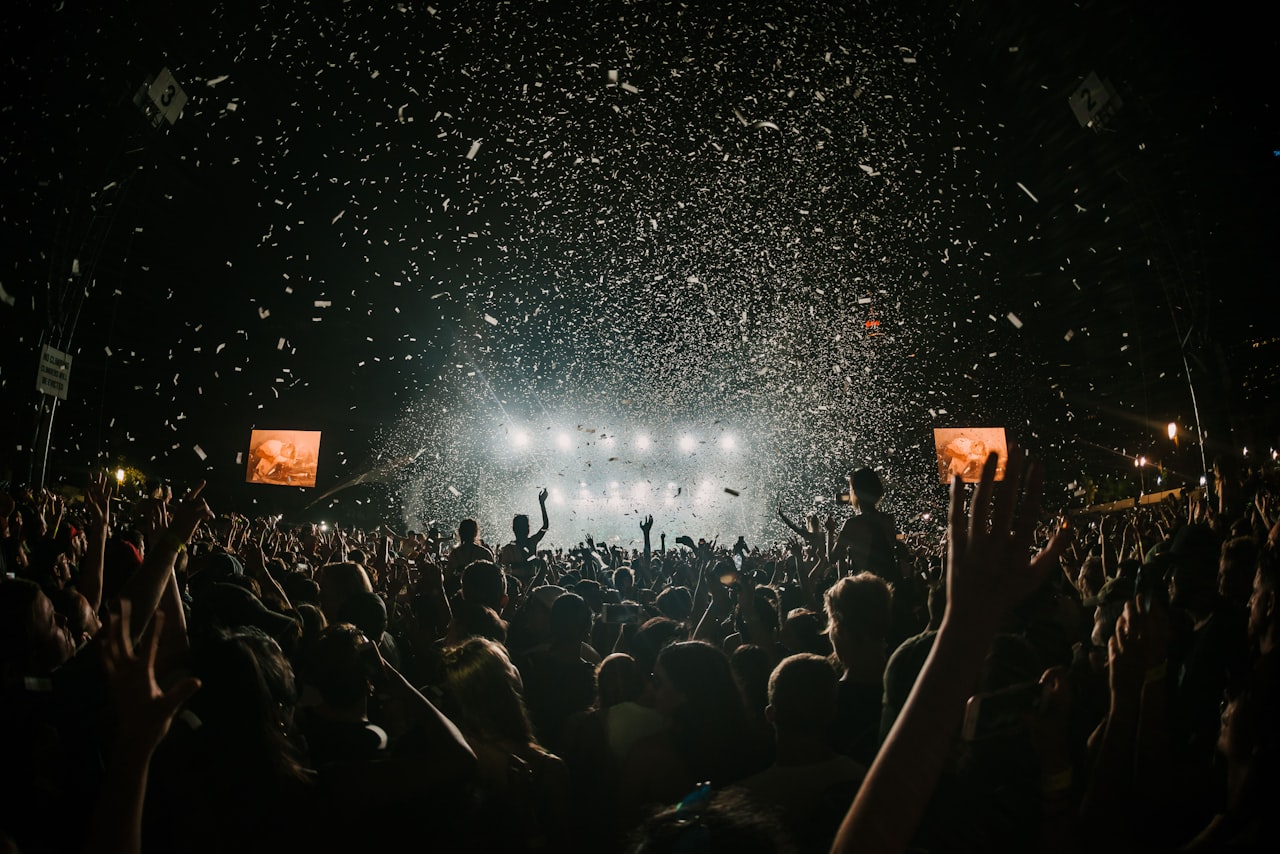
Riot Fest 2026 is a three-day punk, alternative, and indie rock festival held September 18–20, 2026, at Douglass Park in Chicago, Illinois. In a genre built on distrust of institutions, Riot Fest has become one of the most trusted institutions in the alternative music calendar — a festival that has consistently secured reunion performances from bands that hadn't played together in a decade, treated its audience as people with genuine taste rather than a crowd to monetize, and grown from Chicago's basement-show culture into a national destination without losing the ethos it started with.

Riot Fest's identity is inseparable from its audience. The crowd at Douglass Park on a September weekend is the same crowd that bought records from independent labels, argued on early internet music forums, and has maintained allegiances to bands most people forgot about. The festival is in on the joke — the lineups regularly include artists who were dropped by major labels, reformed after bitter public breakups, or whose fan base has spent twenty years insisting they never got the credit they deserved. It rewards exactly that kind of fandom. The neighborhood setting in Chicago's west side gives the event a real-city feel that stadium festivals cannot replicate: this is happening in a park, surrounded by Chicago, and the city bleeds into the festival in the best way.

If your musical vocabulary includes bands like The Replacements, Jawbreaker, The Used, or any post-hardcore act from the early 2000s, Riot Fest was built for you. It consistently programs artists who are nowhere else on the festival circuit, because it actively pursues acts the market has underestimated. The three-day pass is the right choice — the pacing rewards full weekend immersion and the band adjacencies across the schedule create discovery moments that wouldn't happen on a single day.

Chicago in late September is excellent festival weather — temperatures typically range from the upper 50s to low 70s. Douglass Park has enough space that crowd density stays manageable even at peak hours. The festival does not offer camping, but Chicago hotel options are plentiful and the neighborhood is accessible by transit. The beer selection is genuinely good (Chicago's craft brewing scene shows up here). Expect large, passionate, and courteous crowds: this audience has been to enough bad-faith festivals that it has zero tolerance for any of that behavior.

Riot Fest earns its place on Falkor's Nation's Best list because it is the clearest proof that a festival can be built around specific artistic values and maintain them at scale. Every year the lineup is a statement: these artists matter, this music is not nostalgic trivia, the community that loves it is still here and still growing. For anyone who cares about the lineage of American rock and punk, following the Riot Fest lineup — whether or not you're going — is a way of tracking where that lineage lives and who is currently holding it. Tickets on AXS.
Your event has been discovered.
Your audience is already here. Claim it to see who found you.
I'm the one behind this →
More like this
Taste of Chicago 2026 -- Grant Park, Chicago Coming Soon 🌎 Nation's Best 45 days away
Taste of Chicago 2026 -- Grant Park, Chicago
Jul 8 – Jul 12, 2026

Taste of Chicago is one of the oldest and largest food festivals in the United States -- a five-day annual celebration held in Grant Park along the lakefront since 1980 that draws over a million visitors and is free to enter. Food is purchased with tickets at booths from more than sixty Chicago restaurants, making it one of the most accessible major food events in America. It is, by most measures, the definitive annual statement of Chicago's food culture to the rest of the country. What it feels like: Grant Park's lakefront setting gives Taste of Chicago a visual frame that most food festivals do not have. The skyline rises on one side, Lake Michigan on the other, and a mile of food booths fills the space between them. The experience is loose and walking-heavy, which is the point. You are not sitting at a table; you are eating Lou Malnati's deep dish pizza at a picnic table while a live band plays in the background, then walking thirty yards to try Harold's Chicken Shack, then watching someone try deep-fried cookie dough for the first time. The festival represents Chicago's restaurant scene across price points, neighborhoods, and cuisines -- you can eat exclusively from Black-owned restaurants, exclusively from Italian beef stands, or exclusively from places you had never heard of before that day. Worth it? For food and city culture: yes. Taste of Chicago is one of those events that is exactly what it is without apology -- it is not a luxury food experience or a celebrity chef showcase. It is Chicago showing you who it is through what it cooks. If that is your register, five days of lakefront eating with a million other people who clearly feel the same way is a genuinely good time. If you need white tablecloths, this is not your event. That is fine too -- knowing that is exactly what this page is for. What to know before you go: Saturday and Sunday afternoons are the most crowded sessions of the festival. The free concert schedule (included with park entry) runs Friday through Sunday at the Petrillo Music Shell -- headliners are announced in spring. Food tickets are purchased at booths inside the park; typical budget for a full day of sampling is 0-50. Rideshare to Grant Park is straightforward; parking in the Museum Campus and surrounding garages fills fast on weekends. Chicago in July is hot and humid -- bring water, sunscreen, and comfortable shoes. Book hotels well in advance; Chicago's summer hotel market is competitive, particularly around festival weekend. Taste of Chicago earns its place on Falkor's Nation's Best list because it is the rare large-scale event that is genuinely free and genuinely excellent. Most events at this scale cost something. Taste of Chicago costs the price of food, which is both the point and the invitation. Over more than four decades it has become the event through which Chicago annually demonstrates to the rest of the country what it means to have a food culture that belongs to everyone -- not just to the people who can afford the restaurants. The 2026 lineup includes Beach Bunny, Common, Babyface, and Julieta Venegas on the free live music stages.

Lollapalooza 2026 — Chicago, IL Coming Soon 🌎 Nation's Best 66 days away
Lollapalooza 2026 — Chicago, IL
Jul 30 – Aug 2, 2026 From $185 (1-day) / $439 (4-day) Grant Park, 331 E Randolph St, Chi…

Lollapalooza 2026 is four days of over 170 artists across eight stages, held in Grant Park on the shores of Lake Michigan in downtown Chicago every late July and early August. Since its founding in 1991, Lollapalooza has operated as one of American music culture's central institutions — a festival that books across genre with genuine ambition, set against one of the most visually striking urban backdrops of any festival in the world. The Chicago skyline behind the main stage is not just scenery. It is the experience. You are in a park in the middle of a world-class city, watching world-class artists, with the lake to your east and skyscrapers to your north. The crowd — 100,000 people per day — is as mixed as the city itself: festival veterans, first-timers, locals who come every year, tourists who planned the trip around the lineup. The stages are spread across Grant Park with enough distance between them to make cross-stage discoveries feel intentional rather than accidental. Lollapalooza is worth it for anyone who wants festival quality with urban infrastructure. Hotels, restaurants, and transit are all walking distance. This is not a camping event — you sleep in a real bed and walk to the festival. For people who love the music but not the tent logistics, this is the formula. The trade-off: you pay Chicago prices for everything around it. Practical intel: 4-day passes are frequently sold out before June; buy as early as possible. Single-day tickets are the fallback. The Lolla app is essential for scheduling — with 8 stages running simultaneously, the grid is complex. Late afternoon sets in the middle of the day often surprise people more than the headliners. Bring sunscreen — Grant Park has minimal shade. The park closes at 10pm and the city keeps going; Chicago nightlife on festival weekend is exceptional. Lollapalooza holds its Nation's Best position because it has done the hardest thing in live events: stayed genuinely relevant for over thirty years without repeating itself. Grant Park, Chicago. July 30–August 2, 2026. Lollapalooza was founded in 1991 by Perry Farrell as a touring event before it found its permanent home in Chicago in 2005. The shift to Grant Park transformed it from a traveling circus into an institution with a specific identity. Today it is one of the only major American festivals where the headliners skew mainstream enough to bring your parents but the underbill is curated well enough to make the music credibly interesting. The mix works because the setting demands it.

Chicago Air and Water Show 2026 — Chicago, IL Coming Soon 🌎 Nation's Best 82 days away
Chicago Air and Water Show 2026 — Chicago, IL
Aug 15 – Aug 16, 2026 1600 N Lake Shore Dr, Chicago, IL …

The Chicago Air and Water Show is the largest free outdoor air show in the United States — a two-day August spectacle over Lake Michigan that draws over two million spectators to the Chicago lakefront every year. Since 1959, the show has turned North Avenue Beach and the surrounding waterfront into the country's most dramatic free summer event, with military and civilian aerobatic teams screaming over the lake at speeds and altitudes that don't feel real until you're standing there. The experience occupies the entire lakefront from approximately Fullerton Avenue to Oak Street Beach. The U.S. Navy Blue Angels typically headline, performing synchronized formation flying at over 700 miles per hour with wing separations measured in feet. The U.S. Army Golden Knights parachute team, Air Force Thunderbirds, and civilian aerobatic performers fill out a program that runs from roughly 9am to 4pm on both Saturday and Sunday. The sound alone — a physical, chest-deep roar from aircraft passing at low altitude — is something that cannot be replicated by video. Worth it? Who it's for: If you have never seen military precision aerobatics in person, this is the event to do it — and it is free. No tickets. No registration. Just show up to the lakefront. The crowds are massive, particularly on Sunday, but the lakefront is wide enough that even with two million people over the weekend, you can find a workable vantage point. The show is appropriate for all ages; the sensory experience is especially memorable for children. What to know before you go: North Avenue Beach (the primary viewing area) gets extremely crowded by 8am on both days. Arriving early by 7:30am gives you the best beach positioning. CTA buses and the Red/Brown/Purple lines to Chicago or Fullerton stations are the most practical way to get there — driving and parking in Lincoln Park on show weekend is brutal. Bring sunscreen, a portable chair or blanket, water, and ear protection if you are sensitive to loud noise. The Navy Blue Angels typically perform Sunday afternoon at peak intensity. Weather delays happen occasionally — check the official schedule the morning of. The Chicago Air and Water Show is the event where the Chicago summer reaches its most cinematic. Two million people. The Blue Angels. Lake Michigan as the backdrop. The show has run continuously for over 65 years because it produces a feeling of scale that very few free public events can match. Knowing this event exists — and knowing which weekend it falls on — marks you as someone who understands how to get the most out of an American summer.

Chicago Jazz Festival 2026 — Chicago, IL Coming Soon 🌎 Nation's Best 101 days away
Chicago Jazz Festival 2026 — Chicago, IL
Sep 3 – Sep 6, 2026 ✨ New Millennium Park, 201 E Randolph St…

The Chicago Jazz Festival 2026 is one of America's largest and oldest free jazz festivals — four days, September 3–6, 2026, at Millennium Park's Pritzker Pavilion and the Chicago Cultural Center, in the heart of downtown Chicago. What makes the Chicago Jazz Festival singular among major American festivals is not just the caliber of its programming — it's that admission is entirely free. This is the city of Chicago's annual gift to itself and to anyone who arrives with open ears. The Pritzker Pavilion is one of the most beautiful outdoor music venues in the world — Frank Gehry's sculptural steel bandshell and the great lawn it frames provide an acoustic and visual experience that purpose-built music venues rarely match. Experiencing that space with a festival-level jazz lineup, surrounded by Chicago's skyline and the Art Institute across the street, produces a feeling that registers as improbable generosity. The festival programs across the entire spectrum of jazz: from traditional swing and bebop to fusion, Afrobeat, and avant-garde experimental. First-timers regularly end up watching someone they had never heard of and leaving with a new lifelong musical obsession. This is the mechanism: free entry removes the commitment risk and the programming takes care of the rest. If you have any curiosity about jazz — whether you're a lifelong devotee or someone who has been meaning to explore the genre and never found the right entry point — the Chicago Jazz Festival is the ideal answer. Free entry means you can leave any set that doesn't land and arrive late to one that's already started, without having made a mistake. The festival rewards wandering. It rewards the person who shows up not knowing what to expect and ends up staying far longer than planned. Chicago in early September is reliably excellent festival weather — days in the 70s, evenings cooler, no significant precipitation risk. The Pritzker Pavilion lawn fills up for headliners, so earlier arrival helps for the best viewing spots. The Chicago Cultural Center venues are free standing-room performances — arrive early for the intimate sets. Millennium Park's food vendors and the surrounding restaurants in the Loop provide excellent options. The entire festival is accessible by CTA transit from anywhere in Chicago. The Chicago Jazz Festival earns its place on Falkor's Nation's Best list because it represents a category of American cultural institution that is genuinely rare: a world-class festival that asks nothing of you. No ticket purchase, no wristband, no logistical commitment — just show up and participate in the most free version of what this city does best. Jazz is Chicago's music in the same way blues is Mississippi's or country is Nashville's. The festival is the city taking that cultural inheritance seriously and offering it to anyone who arrives. For anyone who has ever wanted to understand why Chicago is Chicago, four days at Millennium Park in September is close to the answer. Free admission.

Bank of America Chicago Marathon 2026 -- Chicago, IL Coming Soon 🌎 Nation's Best 139 days away
Bank of America Chicago Marathon 2026 -- Chicago, IL
Oct 11, 2026 ✨ New Free to spectate Grant Park, 337 E Randolph St, Chi…

The Bank of America Chicago Marathon is one of the six World Marathon Majors -- the elite global circuit that includes Boston, London, Berlin, Tokyo, and New York. Held annually on the second Sunday of October in Grant Park, the 2026 edition on October 11 draws 45,000+ runners across a flat, fast course through 29 Chicago neighborhoods, making it both the most competitive marathon for elite runners chasing world records and one of the most accessible entry points for first-time marathoners in the world. Chicago sets world records at a higher rate than any other major -- this is where history happens in distance running. The Chicago Marathon's legendary flatness is not just a runner's selling point -- it is a spectator advantage. The course loops through neighborhoods that are genuinely Chicago: the Gold Coast, Chinatown, Pilsen, Boystown, Lincoln Park, and back to Grant Park. Local businesses set up unofficial aid stations with beer and tacos along the course. Neighborhood block parties break out spontaneously. The finish line on Columbus Drive, with the Chicago skyline as backdrop, is one of the most photographed moments in American endurance sports. 1.7 million spectators attend each year -- one of the largest sporting audiences in the country on any given day. If you want to run a fast marathon for the first time, Chicago is the answer. The course is flat, the crowd support is relentless, and October weather is ideal for performance. Entry is through a lottery system (opens February, closes March) with charity bib options available year-round. Spectating is completely free along the entire course. The Chinatown stretch at mile 13 is worth the trip alone -- the neighborhood goes all out, every year. Book Chicago accommodations in July at the latest -- Marathon Week hotel rates double and triple around the race. The start and finish in Grant Park is easily accessible via Red Line (Grand or Lake stops). Best spectator spots: mile 9 Boystown, mile 13 Chinatown (the neighborhood goes all out), and the final stretch on Columbus Drive. Volunteer registration opens in September and fills fast. Track runners through the official race app on race day. The Chicago Marathon earns its place on Falkor's Nation's Best list as a city-wide civic event that turns 29 Chicago neighborhoods into a stage for human endurance. A race that draws the world's fastest marathon runners to the same course as a 72-year-old retiree completing their bucket list is a genuinely democratic cultural event. In a sport increasingly defined by exclusion, Chicago runs one of the most accessible World Majors on Earth. Entry and charity bibs at chicagomarathon.com. October 11, 2026. Start and finish: Grant Park, Chicago, IL.

You've seen everything.

Are you going?

Save this event →

Free · No spam · Takes 30 seconds