Sat, Jan 30
🌎 Nation's Best
Gasparilla Pirate Festival 2027 — Tampa, FL
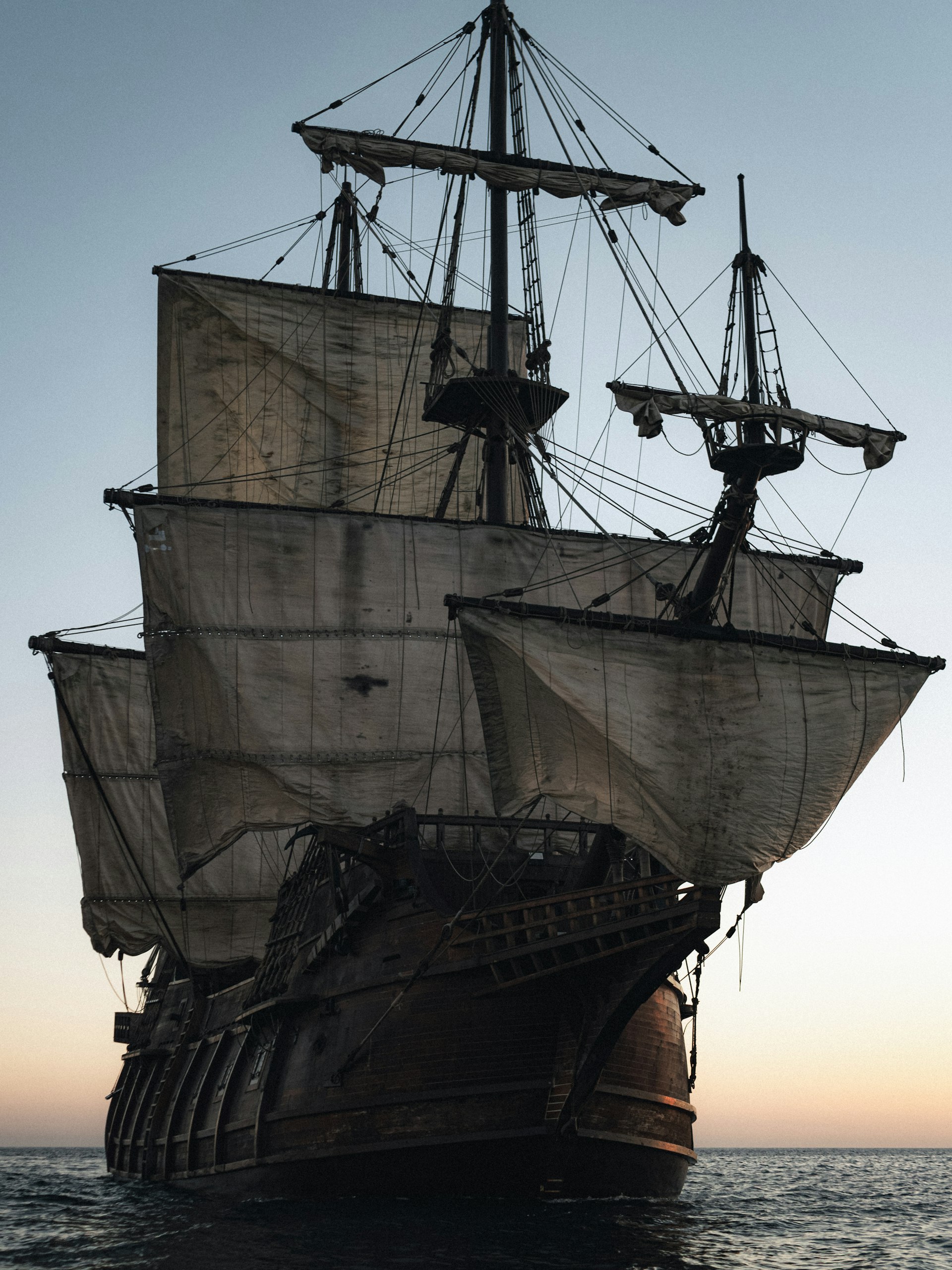
Once a year the city of Tampa surrenders to a pirate who never existed. José Gaspar is a nineteenth-century invention, probably conjured by a real-estate promoter, and Tampa decided more than a century ago to hold an annual municipal celebration of him anyway. A fully rigged pirate ship sails up Hillsborough Bay, several hundred boats escort it, the mayor hands over the key to the city, and then roughly three hundred thousand people watch a four-and-a-half mile parade go north along the water. It has happened since 1904. It is the third-largest parade in the United States and most Americans have never heard of it.
What it feels like is a city that has agreed, collectively and without irony, to be ridiculous for one day. The invasion in the morning is the part that photographs: the galleon coming in under sail with a flotilla behind it, cannon fire, and the whole of Bayshore Boulevard lined four deep. By early afternoon the parade itself takes over, and the thing that surprises first-timers is the scale of local investment in it. This is not a tourist spectacle performed at visitors. Over a hundred floats, dozens of krewes, marching bands, and generations of Tampa families with the same spot on the same stretch of seawall. Beads come down in volumes that have to be seen.
Is it worth it? If you are the kind of person who collects the genuinely strange civic rituals of your own country, this is near the top of the list and it costs nothing to attend. It is not for anyone hoping for a quiet or dignified afternoon, and it is emphatically not a children's event in its main form, which is precisely why the city runs a separate, smaller Children's Gasparilla the previous Saturday.
Things worth knowing: it is free, which makes the logistics the only real cost. Bayshore fills early and parking within walking distance is gone long before the two o'clock step-off, so locals take the streetcar or bike in. Bring sun protection even in January, and understand that Bayshore afterward is a genuinely enormous cleanup operation, so leaving early is not cowardice.
The reason it belongs on a list of the country's best is simple. It is a hundred-and-twenty-year-old tradition built entirely on a fictional character, sustained by a mid-sized American city purely because it wants to, and it is bigger than almost anything comparable. Knowing it exists makes the map of your own country slightly stranger and better. Late January, on the water, in Tampa.
About this event
Details
Posts
Coming Soon
12,103 exploring this week
·
1,138 upcoming in SoCal
Gasparilla Pirate Festival 2027 — Tampa, FL
Going? You can check in after it ends.
Saturday, January 30, 2027
2:00 PM EST – 8:00 PM EST
Happens once a year
· until Jan 31, 2030
You found this. Be the first one here.
Join →
4 Gathering
About
Once a year the city of Tampa surrenders to a pirate who never existed. José Gaspar is a nineteenth-century invention, probably conjured by a real-estate promoter, and Tampa decided more than a century ago to hold an annual municipal celebration of him anyway. A fully rigged pirate ship sails up Hillsborough Bay, several hundred boats escort it, the mayor hands over the key to the city, and then roughly three hundred thousand people watch a four-and-a-half mile parade go north along the water. It has happened since 1904. It is the third-largest parade in the United States and most Americans have never heard of it.
What it feels like is a city that has agreed, collectively and without irony, to be ridiculous for one day. The invasion in the morning is the part that photographs: the galleon coming in under sail with a flotilla behind it, cannon fire, and the whole of Bayshore Boulevard lined four deep. By early afternoon the parade itself takes over, and the thing that surprises first-timers is the scale of local investment in it. This is not a tourist spectacle performed at visitors. Over a hundred floats, dozens of krewes, marching bands, and generations of Tampa families with the same spot on the same stretch of seawall. Beads come down in volumes that have to be seen.
Is it worth it? If you are the kind of person who collects the genuinely strange civic rituals of your own country, this is near the top of the list and it costs nothing to attend. It is not for anyone hoping for a quiet or dignified afternoon, and it is emphatically not a children's event in its main form, which is precisely why the city runs a separate, smaller Children's Gasparilla the previous Saturday.
Things worth knowing: it is free, which makes the logistics the only real cost. Bayshore fills early and parking within walking distance is gone long before the two o'clock step-off, so locals take the streetcar or bike in. Bring sun protection even in January, and understand that Bayshore afterward is a genuinely enormous cleanup operation, so leaving early is not cowardice.
The reason it belongs on a list of the country's best is simple. It is a hundred-and-twenty-year-old tradition built entirely on a fictional character, sustained by a mid-sized American city purely because it wants to, and it is bigger than almost anything comparable. Knowing it exists makes the map of your own country slightly stranger and better. Late January, on the water, in Tampa.
What it feels like is a city that has agreed, collectively and without irony, to be ridiculous for one day. The invasion in the morning is the part that photographs: the galleon coming in under sail with a flotilla behind it, cannon fire, and the whole of Bayshore Boulevard lined four deep. By early afternoon the parade itself takes over, and the thing that surprises first-timers is the scale of local investment in it. This is not a tourist spectacle performed at visitors. Over a hundred floats, dozens of krewes, marching bands, and generations of Tampa families with the same spot on the same stretch of seawall. Beads come down in volumes that have to be seen.
Is it worth it? If you are the kind of person who collects the genuinely strange civic rituals of your own country, this is near the top of the list and it costs nothing to attend. It is not for anyone hoping for a quiet or dignified afternoon, and it is emphatically not a children's event in its main form, which is precisely why the city runs a separate, smaller Children's Gasparilla the previous Saturday.
Things worth knowing: it is free, which makes the logistics the only real cost. Bayshore fills early and parking within walking distance is gone long before the two o'clock step-off, so locals take the streetcar or bike in. Bring sun protection even in January, and understand that Bayshore afterward is a genuinely enormous cleanup operation, so leaving early is not cowardice.
The reason it belongs on a list of the country's best is simple. It is a hundred-and-twenty-year-old tradition built entirely on a fictional character, sustained by a mid-sized American city purely because it wants to, and it is bigger than almost anything comparable. Knowing it exists makes the map of your own country slightly stranger and better. Late January, on the water, in Tampa.
You found your people.
They didn't know each other before Falkor either.
Export to Calendar
+62% shares · +4% members this month