Here is what is coming up at Grant Park, and what has already happened there. Concerts, games, festivals and the smaller nights that never surface in a generic search — no account needed.
Coming up2 events
Coming Soon
12 Gathering
🌎 Nation's Best
3 days away
12
{# Rendered ALWAYS and hidden below the threshold, never omitted. An
element that is absent at 0 cannot be repainted when the reader
makes it 1 — that is why the card's count used to sit stale until
a reload. falkorPresence (base.html) owns the text from here. #}
0 saved
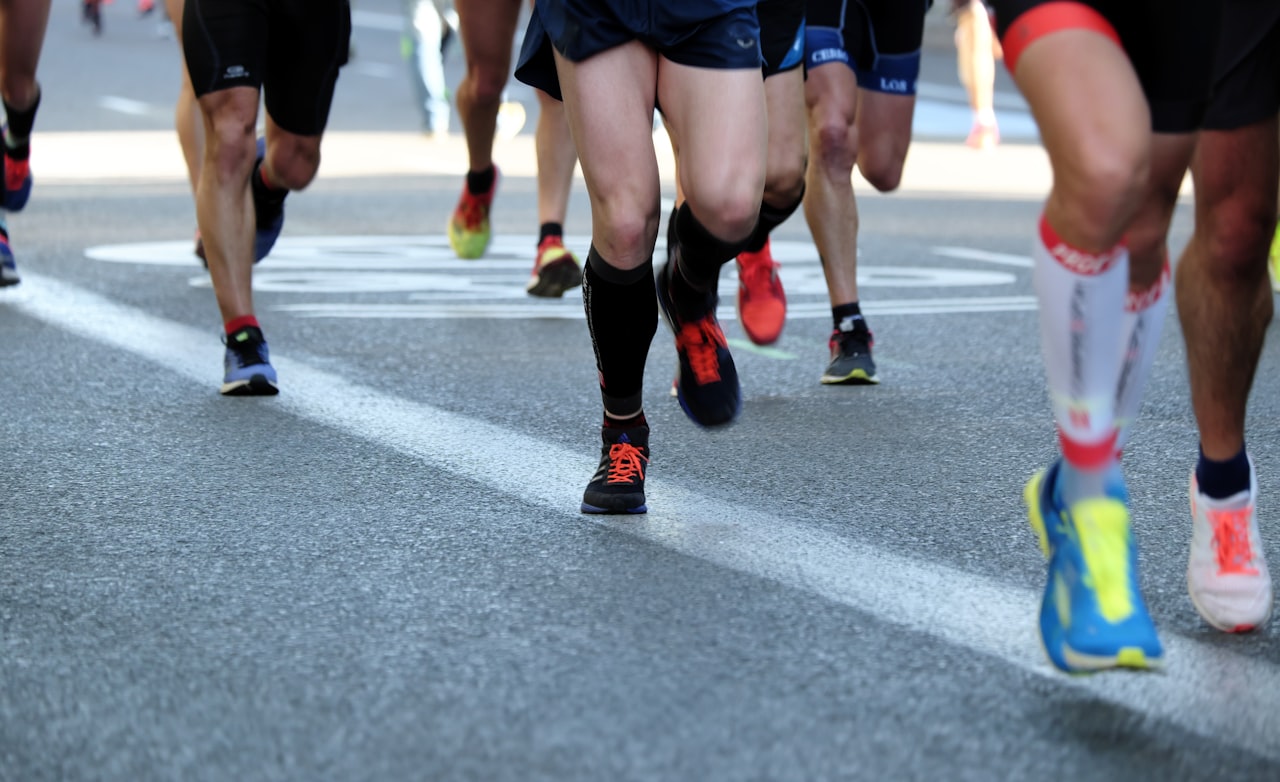
One of the six World Marathon Majors, 45,000 runners, a flat course through Chicago's most iconic neighborhoods. The Chicago Marathon is the benchmark race for runners who have qualified. The Chicago Marathon's legendary flatness is not just a runner's selling point -- it is a spectator advantage. The course loops through neighborhoods that are genuinely Chicago: the Gold Coast, Chinatown, Pilsen, Boystown, Lincoln Park, and back to Grant Park. Local businesses set up unofficial aid stations with beer and tacos along the course. Neighborhood block parties break out spontaneously. The finish line on Columbus Drive, with the Chicago skyline as backdrop, is one of the most photographed moments in American endurance sports. 1.7 million spectators attend each year -- one of the largest sporting audiences in the country on any given day. If you want to run a fast marathon for the first time, Chicago is the answer. The course is flat, the crowd support is relentless, and October weather is ideal for performance. Entry is through a lottery system (opens February, closes March) with charity bib options available year-round. Spectating is completely free along the entire course. The Chinatown stretch at mile 13 is worth the trip alone -- the neighborhood goes all out, every year. Book Chicago accommodations in July at the latest -- Marathon Week hotel rates double and triple around the race. The start and finish in Grant Park is easily accessible via Red Line (Grand or Lake stops). Best spectator spots: mile 9 Boystown, mile 13 Chinatown (the neighborhood goes all out), and the final stretch on Columbus Drive. Volunteer registration opens in September and fills fast. Track runners through the official race app on race day. A race that draws the world's fastest marathon runners to the same course as a 72-year-old retiree completing their bucket list is a genuinely democratic cultural event. In a sport increasingly defined by exclusion, Chicago runs one of the most accessible World Majors on Earth. Entry and charity bibs at chicagomarathon.com. October 11, 2026. Start and finish: Grant Park, Chicago, IL.
Coming Soon
32 Gathering
🌎 Nation's Best
294 days away
32
{# Rendered ALWAYS and hidden below the threshold, never omitted. An
element that is absent at 0 cannot be repainted when the reader
makes it 1 — that is why the card's count used to sit stale until
a reload. falkorPresence (base.html) owns the text from here. #}
0 saved
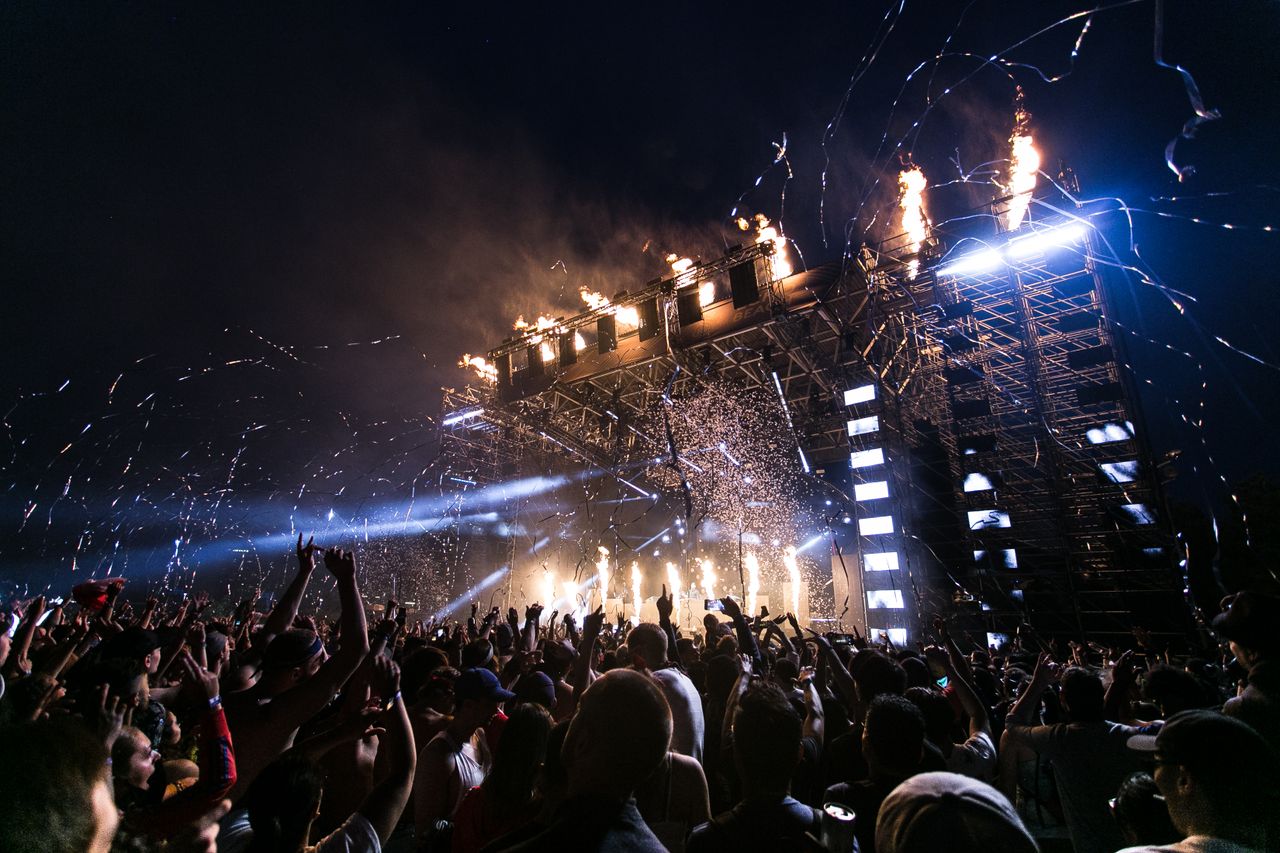
A music festival in the middle of a downtown, with skyscrapers directly behind the stage, is a completely different object from one in a field. You are not escaping the city to see music. The city is standing there watching with you.
Lollapalooza occupies Grant Park in Chicago every summer, and the 2027 edition opens Thursday, July 29. It began in 1991 as Perry Farrell's travelling alternative-rock caravan, died, and was resurrected in 2005 as a destination festival rooted in one park — which turned out to be the version that lasted. It now anchors a global family of Lollapaloozas across South America and Europe, but Grant Park is the original and the one the lineup is built for.
The experience is defined by the skyline and the humidity. Chicago in late July is heavy, thunderstorms roll in off the lake with very little warning, and evacuations are a genuine part of the festival's history rather than a hypothetical. When the sun goes down and the buildings light up behind the main stage, it produces a specific feeling that no rural festival can manufacture — the sense of a city temporarily handing over its front lawn.
Worth it? For a first large festival, this is the most forgiving option in America. It is walkable, it is on public transit, you can sleep in a real hotel bed, and if you need a break you are ten minutes from an air-conditioned building. That convenience is the whole pitch. It is not for someone seeking the immersive, off-grid, lose-your-phone kind of festival — Lollapalooza is emphatically in the world, not apart from it.
What to know: the park is long and narrow, so the two main stages sit at opposite ends and the walk between them takes real time — plan for twenty minutes, not five. Free water refill stations exist and the lines are shorter than the bar lines. Storm evacuation is orderly and well-drilled; follow it and do not treat it as optional. Buying the four-day pass and skipping a day is normal behaviour, not waste.
It earns a place here because it is the festival that proved a city could host one permanently, and because a skyline behind a stage is an image that stays with people who will never buy a ticket.
Opens Thursday, July 29, 2027, in Grant Park.
Previously at Grant Park
2
This Happened
16 Gathered
🌎 Nation's Best
16
{# Rendered ALWAYS and hidden below the threshold, never omitted. An
element that is absent at 0 cannot be repainted when the reader
makes it 1 — that is why the card's count used to sit stale until
a reload. falkorPresence (base.html) owns the text from here. #}
0 saved
Grant Park sits on the lakefront in the middle of downtown Chicago. For four days each late July, it holds 170 artists and 100,000 people per day, and the city becomes the backdrop. The Chicago skyline behind the main stage is not just scenery. It is the experience. You are in a park in the middle of a great city, watching great artists, with the lake to your east and skyscrapers to your north. The crowd — 100,000 people per day — is as mixed as the city itself: festival veterans, first-timers, locals who come every year, tourists who planned the trip around the lineup. The stages are spread across Grant Park with enough distance between them to make cross-stage discoveries feel intentional rather than accidental. Lollapalooza is worth it for anyone who wants festival quality with urban infrastructure. Hotels, restaurants, and transit are all walking distance. This is not a camping event — you sleep in a real bed and walk to the festival. For people who love the music but not the tent logistics, this is the formula. The trade-off: you pay Chicago prices for everything around it. Practical intel: 4-day passes are frequently sold out before June; buy as early as possible. Single-day tickets are the fallback. The Lolla app is essential for scheduling — with 8 stages running simultaneously, the grid is complex. Late afternoon sets in the middle of the day often surprise people more than the headliners. Bring sunscreen — Grant Park has minimal shade. The park closes at 10pm and the city keeps going; Chicago nightlife on festival weekend is exceptional. Grant Park, Chicago. July 30–August 2, 2026. Lollapalooza was founded in 1991 by Perry Farrell as a touring event before it found its permanent home in Chicago in 2005. The shift to Grant Park transformed it from a traveling circus into an institution with a specific identity. Today it is one of the only major American festivals where the headliners skew mainstream enough to bring your parents but the underbill is curated well enough to make the music credibly interesting. The mix works because the setting demands it.
This Happened
13 Gathered
🌎 Nation's Best
13
{# Rendered ALWAYS and hidden below the threshold, never omitted. An
element that is absent at 0 cannot be repainted when the reader
makes it 1 — that is why the card's count used to sit stale until
a reload. falkorPresence (base.html) owns the text from here. #}
0 saved
Jul 8 – Jul 12, 2026
Grant Park, 337 E Randolph St, Chi…
Grant Park in July, two million people over five days. The restaurants of Chicago spread along the lakefront, and the city becomes one long table.
What it feels like: Grant Park's lakefront setting gives Taste of Chicago a visual frame that most food festivals do not have. The skyline rises on one side, Lake Michigan on the other, and a mile of food booths fills the space between them. The experience is loose and walking-heavy, which is the point. You are not sitting at a table; you are eating Lou Malnati's deep dish pizza at a picnic table while a live band plays in the background, then walking thirty yards to try Harold's Chicken Shack, then watching someone try deep-fried cookie dough for the first time. The festival represents Chicago's restaurant scene across price points, neighborhoods, and cuisines -- you can eat exclusively from Black-owned restaurants, exclusively from Italian beef stands, or exclusively from places you had never heard of before that day.
Worth it? For food and city culture: yes. Taste of Chicago is one of those events that is exactly what it is without apology -- it is not a luxury food experience or a celebrity chef showcase. It is Chicago showing you who it is through what it cooks. If that is your register, five days of lakefront eating with a million other people who clearly feel the same way is a genuinely good time. If you need white tablecloths, this is not your event. That is fine too -- knowing that is exactly what this page is for.
What to know before you go: Saturday and Sunday afternoons are the most crowded sessions of the festival. The free concert schedule (included with park entry) runs Friday through Sunday at the Petrillo Music Shell -- headliners are announced in spring. Food tickets are purchased at booths inside the park; typical budget for a full day of sampling is 0-50. Rideshare to Grant Park is straightforward; parking in the Museum Campus and surrounding garages fills fast on weekends. Chicago in July is hot and humid -- bring water, sunscreen, and comfortable shoes. Book hotels well in advance; Chicago's summer hotel market is competitive, particularly around festival weekend.
Taste of Chicago earns its place on Falkor's Nation's Best list because it is the rare large-scale event that is genuinely free and genuinely excellent. Most events at this scale cost something. Taste of Chicago costs the price of food, which is both the point and the invitation. Over more than four decades it has become the event through which Chicago annually demonstrates to the rest of the country what it means to have a food culture that belongs to everyone -- not just to the people who can afford the restaurants. The 2026 lineup includes Beach Bunny, Common, Babyface, and Julieta Venegas on the free live music stages.