Every day· Next Dec 29
San Diego Civic Theatre, 1100 3rd …
The movie became a meme became a cultural institution became a Broadway musical became the thing every family does between Christmas and New Year's because nothing else captures that specific week-between-holidays energy quite like Buddy the Elf trying to hug a stranger.
Elf the Musical at the San Diego Civic Theatre is the holiday show that works for the four-year-old and the forty-year-old in the same row — and both of them will be singing 'Santa's Coming to Town' on the drive home. The touring production brings the full Broadway staging: the sets are enormous, the costumes are absurd, and the cast treats the material with exactly the right amount of seriousness, which is none at all.
Broadway San Diego closes the 2026 calendar with this one, and the timing is perfect — the week between Christmas and New Year's when nobody has anywhere to be and everyone needs somewhere to go.
December 29, 2026 through January 3, 2027. San Diego Civic Theatre, downtown.
Jan 2 – Jan 3, 2027
From $28
1720, 1720 E 16th St, Los Angeles,…
A two-minute stretch of a 1998 vampire movie quietly rearranged what a lot of people wanted out of a night out. Sprinklers opening up in a meat locker, techno loud enough to feel in your teeth, and the dawning understanding that the party was never meant for you. Some people saw that once at thirteen and have been chasing the room ever since, through clubs that were never quite dark enough and never quite wet enough.
This is the room. A downtown warehouse gets dressed as the vampire underworld for one night: DJs working goth, techno and house, dancers working overhead, cosplayers who clearly took the assignment seriously, drinks named after things that should not be drinks, and a limited run of blood bags that disappear early. At midnight the ceiling opens. If you are standing in the crowd when it does you will not be dry afterward, and that is the entire point. The blood is washable and the regulars dress for it, which is the detail that separates the people who have done this before from the people who wore something nice.
Doors at 9pm, ages 18 and up, at 1720 E. 16th Street in the warehouse district. Tickets start around $28.
The first Sunday of a new year is the last free day before the whole machine starts again. School, work, traffic, the alarm. You can feel it coming from about four in the afternoon onward, and the only real defence is to be somewhere with a scoreboard.
Orange County's team exists because of a Disney movie, which is a genuinely ridiculous origin story for a club that went on to win this league in 2007. Longtime people still call the building the Pond, after a name it has not officially carried in twenty years, and you can tell roughly how long somebody has been coming by whether they say it.
A five o'clock start on a Sunday means families, which means the noise is higher pitched and considerably more sincere than a weeknight crowd.
For the kid in your life who has only ever seen ice on television.
Five o'clock at 2695 E Katella Ave.
There is a specific pleasure available to a person who loves movies and almost nowhere else: sitting in a dark theater as the lights drop on a film nobody has decided about yet - before the critics, before the distributors, before the awards fix its meaning - knowing you are among the first in the country to see it at all. For the first time in its history, Sundance Film Festival is chasing that feeling somewhere new. The 2027 edition leaves Park City for Boulder, Colorado - eleven days of independent film premieres, January 21-31. What Sundance does is give independent films their moment: the ones made outside the studio system, often by first-time directors, often about subjects the mainstream industry would not greenlight, which then go on to define what American film culture talks about for the next year. The festival is where distributors compete to acquire films that shape awards season and where filmmakers at the start of their careers are suddenly everywhere. It is worth attending even if you only see two or three films - the conversations in line, the post-screening Q&As, the sense of being among people who came specifically to take film seriously make it unlike any other cultural experience in America. The film-going is the occasion; the community is the point. Boulder's arts infrastructure, university energy, and mountain setting give the 2027 edition a character Park City could not replicate. January in Boulder means cold and likely snow, so serious winter gear is required. The venue network spans Boulder's historic downtown, with screenings at theaters, university venues, and purpose-built festival spaces. The Sundance website is the authoritative source for pass types and purchase timing - passes sell out quickly after presale announcements, which typically begin about six months before the festival. Whether you attend or follow the conversation from home, knowing what premiered there tells you what American cinema is trying to become.
The films scatter into the rest of the circuit afterward, and the argument about them runs all year whether you were in the room or not.
Feb 5, 2027
$85+
Ontario Convention Center, 2000 E …
Growing up out here meant everything good was ninety minutes away. The concerts were in Los Angeles, the conventions were in San Diego, and the deal was always the same: somebody's parent drives, or you do not go. A whole generation of Inland Empire kids learned that their own taste was something you had to commute to.
So a horror convention that is genuinely, unapologetically Ontario's is a different object than a horror convention that merely happens to be in Ontario. Over a hundred and seventy vendors, and the thing veterans will tell you is to come on the Friday, which runs five until ten. It is the short day and the quiet one, which makes it the only session where the dealers' room is actually walkable and the people behind the tables have time to talk. Saturday is when it becomes a crowd.
From $85, with the early badge getting in an hour ahead on the weekend. The IE horror scene runs on the haunts and the drive-in revivals the rest of the year, and this is where everybody who makes those finds each other.
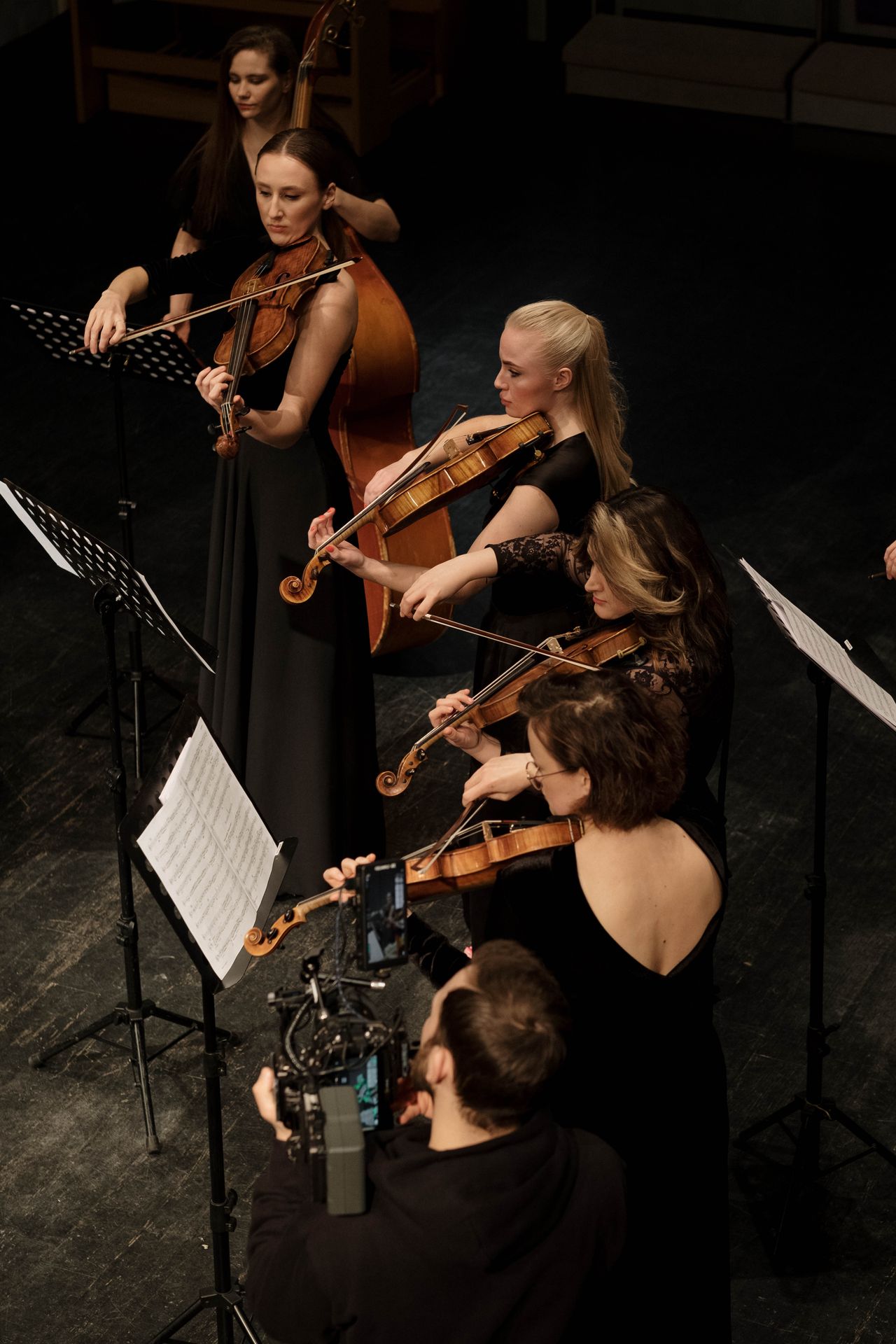
A string ensemble playing a warehouse in the Fashion District on a Sunday is not a thing that should work, and the entire appeal is finding out whether it does. The billing promises strings and love letters, which sets a specific expectation — intimate, slightly theatrical, not remotely a club night — inside a 700-capacity room with concrete floors and four bars that normally hosts punk bills and techno. That mismatch between material and room is the most interesting programming in the city right now. Free, seven o'clock, 1720 E 16th St. Take the person you would write one to. Los Angeles promoters have started putting chamber and acoustic programmes into warehouse venues, and the results are consistently stranger and better than the same material in a concert hall.
Feb 25, 2027
$32.50
Belly Up Tavern, 143 S Cedros Ave,…
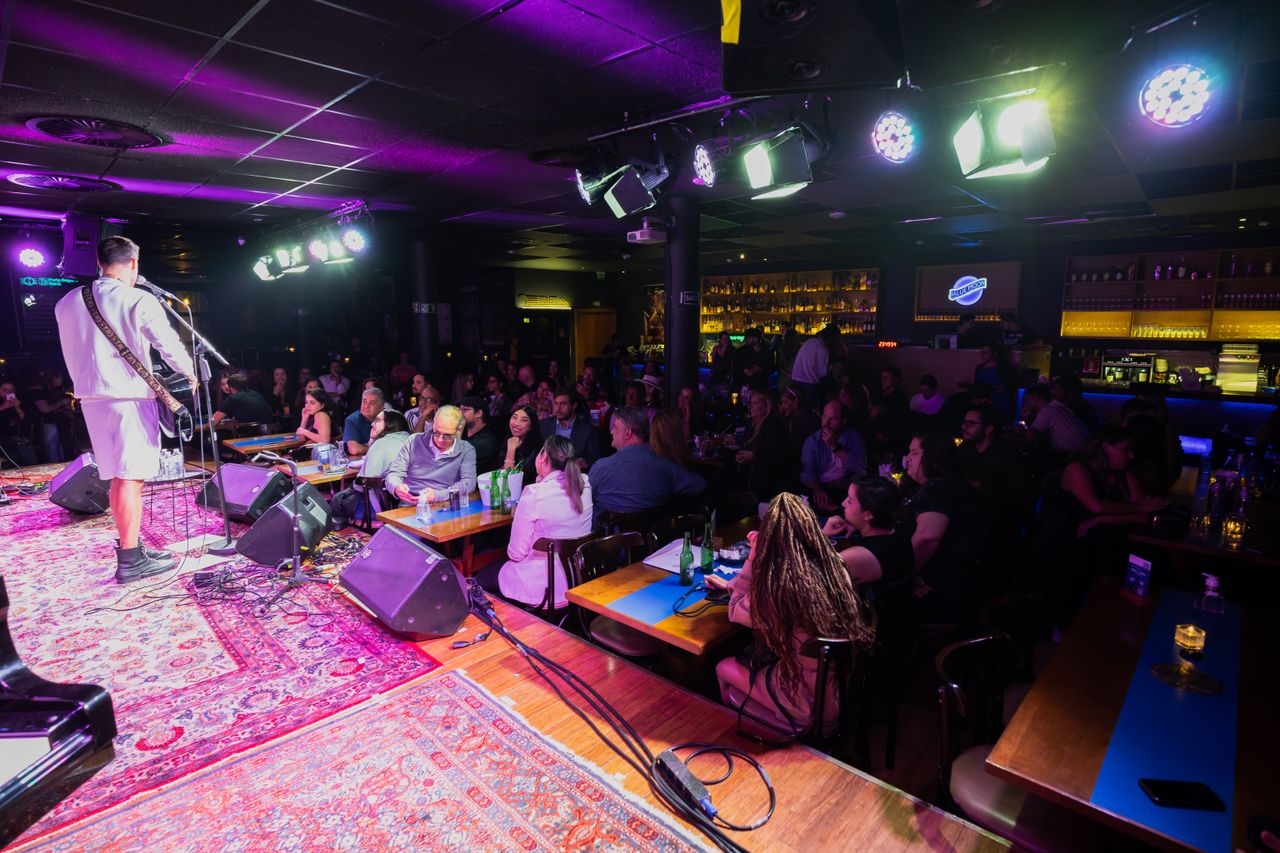
Flamenco guitar over four-on-the-floor house, performed by two men committed to a bit that stopped being a bit several albums ago. It should not work. It has been working for years.
Paco Versailles is the project of Danny Harris and Ricky Lobo, and the live version leans theatrical in a way the records only hint at. The guitar is real flamenco playing, not sampled, which is the hinge the whole thing turns on: without it this would be a novelty, and with it the room ends up dancing to something it cannot quite categorise.
Late February is the dead centre of the North County calendar, when nothing tours and the Belly Up books the acts it actually likes. Those are frequently the best nights of the year in that room.
Doors 7pm, show 8pm. $32.50, Cedros Avenue.
Most bands that have been difficult for thirty years stopped being difficult around year four and started performing difficulty instead. This one never made that trade, which is why the records still sound like four people disagreeing productively at high volume, and why the live show remains genuinely unpredictable rather than theatrically so. Songs collapse and restart. A pop melody as sweet as anything on the radio sits directly beside something that sounds like the drums falling down a staircase, and the band treats both with the same seriousness. The drumming alone is worth the ticket and is the thing people leave talking about. The audience tends to be a specific type, the person who has spent years recommending this band to friends with middling success, and there is real pleasure in finally being surrounded by the ones who said yes. If you have been curious and intimidated, the live version is easier to love than the records. Late February, on a Thursday; the doors open at seven and the first note lands an hour after that.
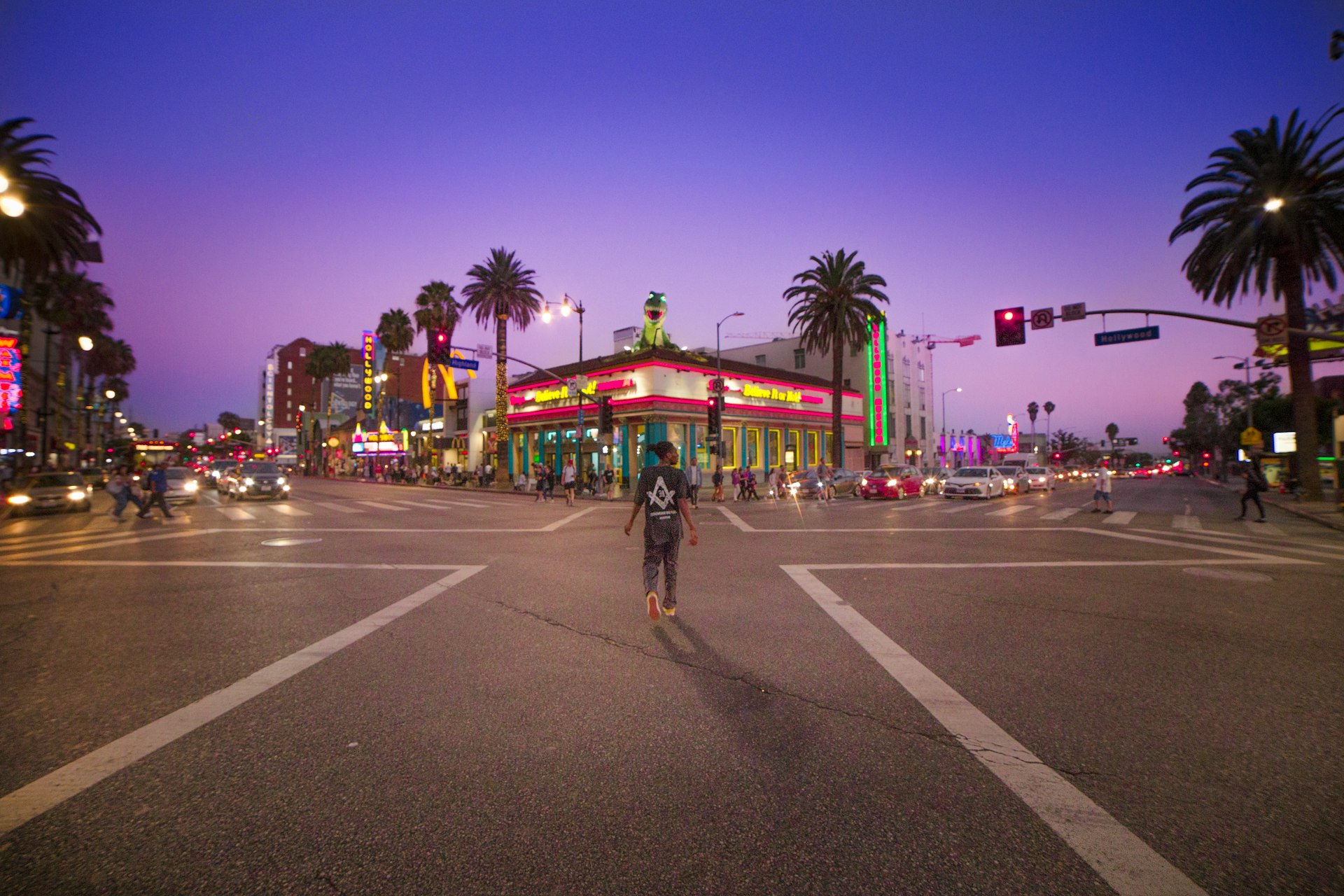
For one night the boulevard stops belonging to tourists and belongs entirely to the movies. Traffic gone. Barricades up. Four blocks of Hollywood under the attention of most of the planet at once.
People forget the ceremony has an outside. The fan zone along the carpet approach is a real thing you can stand in — registered spectators watch the arrivals from designated areas, and registration opens on the Academy's site weeks ahead and fills within hours. The street shuts to through traffic that morning, the Dolby's entrance becomes the carpet, and the surrounding blocks turn into perimeter and infrastructure. The whole neighborhood takes on the particular charge of a night the world is watching your city block.
Downtown Hollywood, Metro to Hollywood and Highland, free to observe from the public areas outside the perimeter.
Go with the person who has a strong opinion about every Best Picture winner of their lifetime.
Every day· Next Apr 1
Los Angeles Convention Center, 120…
Fifty years ago a farm boy looked up at twin suns and a generation learned what longing sounds like.
Star Wars Celebration returns to Los Angeles on April 1–4, 2027, to mark the 50th anniversary of the film that changed everything. This is the gathering where Lucasfilm pulls back the curtain — world premieres of upcoming projects, panels with the creators who are building the next chapters, first looks at footage that won't exist anywhere else for months. The show floor spans the LA Convention Center with walk-through exhibits, a cosplay showcase that draws the most ambitious builders on the planet, exclusive merchandise that sells out before lunch, and the collective energy of tens of thousands of people who all trace something essential about who they are back to that same opening crawl.
The 50th anniversary makes this one different. Half a century of stories, characters, music, and moments that shaped how an entire culture thinks about heroism, redemption, and the distance between who you are and who you could be. Whether you've been here since 1977 or discovered it last year, Celebration is the room where every version of that journey is valid.
What makes Star Wars Celebration unlike any other fan convention is that it is the only place where the future of the franchise is revealed first. Every major announcement — from The Mandalorian's debut trailer to Ahsoka's first footage to the reveal of new theatrical films — happened at Celebration before it happened anywhere else. The industry comes because Lucasfilm treats this room as the premiere venue. The fans come because they've been part of this story longer than most relationships in their lives.
Expect four full days of programming: the headline showcase at the Honda Center (separate ticket tier), hundreds of panels across multiple stages, the Fan Stage where cosplayers and community creators take the spotlight, interactive experiences that put you inside the worlds of the saga, and the Artist Alley where illustrators who shaped the visual language of Star Wars sell original work.
Four-day adult passes from $260.99. Children 4–12 from $105.99. Los Angeles Convention Center. April 1–4, 2027. The anniversary year has screenings and smaller gatherings running all through it, and the people in this room will be at those too.
May 28 – May 31, 2027
Paid - $75-$120
San Jose Convention Center, 150 W …
No corporate booths dominating the floor. The panels, the screenings, the programming — all of it organized by volunteers who have been running this for decades, which gives it an atmosphere that is genuinely hard to replicate. It feels less like a trade show than the largest anime club meetup in California.
It has run every Memorial Day weekend since 1994, drawing 25,000 to 30,000 people across four days. Programming runs 24 hours. The Saturday cosplay masquerade is a full theatrical production. The gaming hall is one of the best at any convention — tournaments, free-play consoles, retro arcades running through the night. In the dealer room and artist alley, indie creators outnumber corporate licensors.
San Jose Convention Center, 150 W San Carlos St.
Four-day badges sell out; single-day passes are sometimes available at the door. If you have done Anime Expo but never this, the culture is meaningfully different — and the difference is the point.
A neighbourhood people had stopped walking into is not a problem money can solve. A film festival was somebody's answer to it, and the strange part is that it worked. Robert De Niro, Jane Rosenthal and Craig Hatkoff founded it in 2002 to pull people back into lower Manhattan after September 11, and twenty-five years later it has become the most genuinely public of the major festivals - less a market than a city-wide fortnight. The twenty-sixth edition runs June 3 to 12, 2027, across venues in Manhattan, with passes already on sale and submissions open.
What it feels like, in practice, is New York in early June doing what it does best: too much happening at once, outdoors, in public. Tribeca long ago stopped being only a film festival. Since 2021 it has programmed television, podcasts, games, interactive work and live audio, and the result is that a single afternoon can take you from a documentary premiere to a podcast recorded live in front of six hundred people to an outdoor screening in a plaza where nobody paid anything. Screenings are routinely followed by conversations, live performance or a reunion of a cast, so a two-hour film becomes a three-hour evening. Red carpets happen on open streets rather than behind a mountain cordon, which is why Tribeca has a reputation for being the festival where ordinary ticket-buyers actually see people.
Is it worth it? Yes - and specifically it is worth it for people who assume a major film festival is not for them. Sundance requires a mountain and a car; Cannes requires an industry badge. Tribeca requires a subway ride. If you are the sort of person who likes seeing something before the reviews exist and then arguing about it on the walk to the train, this is built for you. It is not the festival to attend if you want the year's awards contenders; those premiere in the autumn. Tribeca's strength is documentary, New York stories, and first features.
What to know before you go: the rush line is real and it works. A screening showing as sold out online will almost always seat most of the rush queue at showtime, because advance sales close early and no-shows are common - locals buy single tickets at the door routinely. Skip the Storytelling Summit and anything staged at the Beacon Theatre if you are watching money; those are the premium tier and the programming is not proportionally better. Do seek out the free outdoor screenings, which are the best value in American festival-going and are where the founding civic purpose is still most visible. There is an Under 25 pass, and a Hudson Opening Weekend pass that covers unlimited priority access from opening day through that first Monday.
Tribeca earns its place here because it is the rare cultural institution whose origin story is a civic one and whose present form still honours it. It was built to get people to walk back downtown. It still mostly works like that - which is why knowing it exists, even from three thousand miles away in June, is worth something.
Jun 24 – Jun 24, 2027
Henry Maier Festival Park, 200 N H…
Nobody outside the Midwest quite believes the numbers. Three weekends, a permanent lakefront grounds built for nothing else, a dozen stages running simultaneously, and a gate price that has historically cost less than a single arena seat anywhere else in the country.
Summerfest has been recognised as the largest music festival in the world, and the genuinely strange thing about it is that it is not a destination festival in the Coachella sense at all. It is municipal. Milwaukee built Henry Maier Festival Park specifically to hold it, the grounds sit directly on Lake Michigan, and for most of the city this is simply what happens in summer. People go after work. They go on a Tuesday, alone, for two hours. There are families who have gone every year for three generations and hold firm opinions about which stage has the best sightlines, which they will share with you unprompted.
The format is the whole appeal. Instead of one enormous headliner slot organising everything, the park runs a dozen stages at once, most included with gate admission, which means the correct way to attend is to walk until something stops you. You will catch a band you have never heard of in front of four hundred people and then walk ten minutes to a stadium show. The hierarchy that structures every other festival is deliberately flattened here, and regulars will tell you the unknown band is usually the better story.
For 2027 the festival moves back a week from its usual slot, running across three weekends in late June and early July rather than the traditional dates. Organisers make this shift periodically as the calendar drifts, and partly to leave room for Milwaukee's other cultural festivals, which use the same grounds through the rest of the summer. That detail explains the city better than anything else: Milwaukee built a permanent park for festivals and then filled it with them.
Worth knowing before you go: the lake makes evenings genuinely cold even in July, the fish fry is not a tourist affectation and you should eat one, and the cheapest admission falls early in each weekend run. Parking is a known ordeal and the shuttles exist for good reason.
Most people reading this will not spend a late-June evening on a pier in Wisconsin listening to a band they cannot name while the sun goes down over a freshwater sea the size of a small country. It is worth knowing that for the price of a cinema ticket, you could.
Most conventions rent a building. This one takes a city. Over Labor Day weekend the entire hotel district of downtown Atlanta is absorbed — five host hotels connected by skybridges, tens of thousands of people moving between them at all hours, and a parade down Peachtree Street that closes the road and draws crowds who are not attending at all. Dragon Con is the closest thing American fandom has to a carnival, and the distinction from a trade show is not cosmetic.
Because it is spread across hotels rather than a convention center, the event never has a closing time. Programming runs past three in the morning. There are more than forty separate fan tracks, which means the schedule includes serious literary panels, a robotics track, a puppetry track, several music stages and an entire independent film festival, all running simultaneously. The costuming is on a different level from other conventions — people build for a year — and the skybridges function as continuous informal runways where that work gets seen. It is also famously a drinking convention with a well-developed late-night culture, which is either the appeal or the warning depending on who you are.
Worth it? If you want the most all-encompassing and least corporate large fandom experience in the country, there is nothing else like it and the scale genuinely surprises people. If you want a quiet, structured weekend or you are bringing small children, this is the wrong one — it is loud, crowded, and does not sleep. The honest summary is that Dragon Con is a festival that happens to be about fandom rather than a convention with a party attached.
What to know: host hotel rooms are gone roughly a year in advance and staying on the skybridge network versus off it is the single biggest variable in your weekend. Atlanta in September is hot. The parade is Saturday morning and worth setting an alarm for even if you are not in it. Buy your badge early — the price ladder is steep. And accept that you will miss most of what you wanted to see; everyone does.
It is on this list because a fandom that builds an entire temporary city once a year is a genuine American cultural phenomenon, and knowing it happens changes your sense of the scale of this thing. Dragon Con 2027 begins September 2, 2027 across downtown Atlanta.
Sep 27 – Jul 25, 2027
Academy Museum of Motion Pictures,…
Standing close enough to see how a scare was built does not ruin the scare. It does the opposite. The practical effect, the sound design choice, the lighting decision that makes an image frightening rather than merely dark, horror is the most technically demanding genre in film, and looking straight at its machinery is a different way of loving movies you have watched in the dark for twenty years. The Academy Museum keeps the physical history of cinema, the props, the production archives, the paper evidence that the films you love were made by real people solving real problems in real rooms. That institutional weight lands hardest on the genre most often denied it. Original props, behind-the-scenes materials, restored footage, and curation built around the craft problems horror filmmakers solved with nothing but ingenuity. Give it longer than you think you need, and give the building a minute too. Go with whoever first showed you the movie that scared you into loving all of this.
There's more here for you.
An account shows you movie & film events matched to your exact taste — not just what's popular.