Monthly· Next Nov 1
Grand Avenue and Historic Core, 1 …
On the first Thursday of every month, a stretch of Downtown Los Angeles turns into a free, walkable art evening that feels like the city decided to stay up past its bedtime for a good reason. DTLA ArtNight opens galleries, museums, and pop-up spaces along Grand Avenue, the Historic Core, and the Fashion District from 6 PM to 10 PM.
This is not an art walk in the corporate-sponsored sense. It is a neighborhood decision to keep the doors open late and let people wander. The Broad, MOCA, and Grand Park participate, but so do the spaces you have never heard of -- the ones with no website and a single light on inside. The crowd is a mix of serious art people, first-daters, and families who are all seeing the same thing and getting completely different experiences from it. There is no cover, no wristband, no list. You walk in and the art is there.
Free admission. Galleries and studios along Grand Avenue and the Historic Core -- start anywhere, follow the lights.
You carry rooms inside you that nobody has named yet.
Walk into a decommissioned hospital in the middle of Los Angeles — four floors, eighty rooms, seventy artists — and find them already waiting. An old ER bay is a chapel of grief lit entirely in blue. A patient room holds a forest of paper cranes that rustle when you breathe. An operating theater has become a confessional where strangers wrote down the things they never said out loud, and you are allowed to read them.
There is no route through it. You wander, and you end up standing still in doorways longer than you meant to. Some rooms are quiet. Some are too much. All of them are honest, and you leave carrying something you did not walk in with.
The former St. Vincent Medical Center on West 3rd Street, with reduced admission for students, seniors, veterans, and kids.
Go with somebody you can be quiet around afterward. You are going to need the drive home.
You walked through a gallery once and everything had a red dot on it and the prices had commas and you thought: this isn't for me. You were right. That space wasn't. This one is.
The Other Art Fair brings 160 independent artists to Barker Hangar in Santa Monica for four days of work you can actually afford, by people who are still making it with their hands in rooms you'd want to visit. Walk-in installations interrupt the booth rows. DJs play sets that shift the energy between floors. A full bar means you can hold a drink while you decide if that painting you've been circling for twenty minutes is going home with you.
The fair exists because the art world has a front door problem — too many people feel like they need an invitation. This is the side entrance. No invitations. No gatekeeping. Just art at a price point that means you buy it because it speaks to you, not because your accountant approved it. The 16th LA edition.
September 24–27, 2026. Barker Hangar, 3021 Airport Ave, Santa Monica, CA 90405. Tickets at theotherartfair.com.
The North Beach of Asbury Park, September, three stages in the ocean wind. Sea.Hear.Now turns the New Jersey waterfront into the kind of outdoor festival that reminds you why outdoor venues exist.
The setting makes Sea.Hear.Now different from every other music festival on the calendar. You are on a beach. The ocean is not scenery you look at from a festival field. It is where you are standing. Pro surf competitions run parallel to the music on both days. Large-scale art installations occupy the boardwalk and the park spaces between stages. Asbury Park has one of the most distinctive boardwalk cultures on the East Coast, and the festival fully occupies it. Watching a band from 1994 play a set while the Atlantic rolls in behind them is an experience that cannot be replicated in a field in the middle of a state somewhere.
Sea.Hear.Now is worth attending if you have a catalog of music that spans the 1990s through today and want to hear it played live in one of the genuinely beautiful public spaces left on the American coast. This is not a festival for people who need the headliners to be brand new. This is for people who love well-established artists playing at full power in an outdoor setting that elevates everything. The Pixies on a beach in New Jersey in September is not a sentence that requires further justification.
Asbury Park is about 90 minutes from New York City and 75 minutes from Philadelphia by car or train. NJ Transit runs direct to Asbury Park station, which is walking distance from the beach. Hotels in town book up weeks in advance. The surrounding towns of Belmar, Spring Lake, and Ocean Grove offer alternatives. September in Asbury Park is typically the best beach weather of the year: warm enough to be comfortable, cool enough to be manageable, without the peak summer crowds. Layers for evening sets are recommended as ocean temperatures drop the air once the sun goes down.
Sea.Hear.Now has become one of the defining autumn music events on the East Coast in a short amount of time. It earns its place on Nation Best because the combination of lineup quality, venue character, and setting is genuinely rare. Most good music festivals happen in a field. This one happens at the edge of the ocean, in a town with its own cultural identity, with a program that respects both the music and the place it is played. September beach concerts are a different kind of good. Tickets at livenation.com.
A week where surfing, music, and art collide in the town that was built for all three. Sessions Surf Festival takes over Encinitas from September 12-19, 2026 — surf film screenings at the La Paloma Theatre, a community surf contest at Seaside Reef, art exhibits in local galleries, and headlining music acts including Osees, Unwritten Law, and Bully playing stages scattered across the coastline.
Formerly the Solento Surf Festival, Sessions has grown into the kind of week-long celebration that defines what Encinitas actually is: a surf town that takes its culture seriously without taking itself too seriously. Live music runs most nights. The surf contest draws local rippers who ride this break every morning. The film festival screens the kind of indie surf documentaries that never make it to streaming.
Multiple venues across Encinitas — Seaside Reef, La Paloma Theatre, and local galleries. Check sessionssurffestival.com for the full schedule and tickets.
If Encinitas is your town, you already know. If it's not, this is the week it becomes your town.
Aug 30 – Sep 7, 2026
Black Rock Desert, Pershing County…
Burning Man does not explain itself to people who haven't been. That is not arrogance — it is accuracy. From August 30 through September 7, 2026, Black Rock City rises in the Nevada desert under the theme Axis Mundi — a temporary city of 70,000+ participants, 75 commissioned large-scale art installations, and an infrastructure that includes a real airport, a medical center, and a Department of Mutant Vehicles. It disappears without a trace. That erasure is part of the philosophy. The experience is unlike anything the festival world produces. The art is architectural in scale — pieces you walk through, that move, that light up against the desert dark at 2 AM when you're riding a bike across a city that didn't exist two weeks ago. The gifting economy is real: no commerce inside Black Rock City. Every interaction is a gift or a mutual exchange. The community that forms here is not a festival crowd. They are building something together, and the Burn — the ritual burning of the Man on Saturday night — marks what they built. The honest answer to "is Burning Man worth it" depends entirely on what you're willing to bring. The people who arrive expecting a festival and leave disappointed misread the invitation. The people who come back every year understood it was a city. If you want to arrive and be entertained, this is not the event. If you want to arrive and build something — a camp, a community, an art piece, a persona — there is nothing like it. What to know: Black Rock City sits at 4,000 feet elevation on a dry lake bed. Daytime temperatures exceed 100°F; nights drop to the 40s. You bring everything — food, water (1.5 gallons per person per day minimum), shelter, bicycle for navigation, dust protection. Playa alkali dust gets into everything. Tickets are sold through a lottery and sell out months in advance. Plan for two days of driving on either end. The desert is six hours from Los Angeles. Black Rock City 2026 runs August 30 through September 7. Tickets are available now. The city is real. The principles are real. The people are why.
Sep 5 – Sep 6, 2026
Benjamin Franklin Parkway, Philade…
Jay-Z shuts down a boulevard between City Hall and the Art Museum every Labor Day weekend. That choice is the whole argument. The Benjamin Franklin Parkway is not a parking lot or a fairground. It's a European-style civic boulevard lined with museums and cultural institutions — the kind of street that announces a city taking itself seriously. For two days every September, it becomes Made in America's main stage, and Philadelphia's skyline sits behind the headliners like the city dressed for the occasion. The Rocky steps are to your left. That is not incidental. The iconography is intentional: Jay-Z's claim on this specific piece of civic geography is what the festival is about before a single note is played — hip-hop culture, in the middle of the institutions, where it belongs. The festival is curated, not assembled. The lineup reflects Jay-Z's range as a cultural reader: hip-hop and R&B at the center, reaching into pop, alternative, and electronic at the exact intersections where the genres actually meet. You'll feel the difference. September 5–6, 2026 | Benjamin Franklin Parkway, Philadelphia, PA Philadelphia in early September runs warm — upper 70s, outdoor all day. Sunscreen and real shoes, not sandals. The Parkway is long and you will cover it. Plan on arriving at dusk for the headliners — that's when the city skyline fully activates behind the stage and the crowd finds its density. Daytime sets are worth catching, but dusk is when the setting becomes undeniable. If you can only be there for a few hours, be there at sunset. General admission puts you in the mix. Single-day and two-day passes both available; the full two days is the full argument. Downtown Philadelphia hotels are walking distance from the venue. SEPTA subway and bus connect from throughout the metro — the parking situation near the Parkway on Labor Day weekend is not something you want to discover on the day. The festival is family-appropriate for most of the day and intensifies as the headliners close each night. The crowd skews intentional — people who came because they know what Jay-Z thinks matters, and want to see his current read on it. That specificity shows in how the crowd moves and what it responds to. The Parkway, the Art Museum, City Hall — the setting makes the declaration fresh every year. The lineup is Jay-Z's current read on where American music is and where it's going. Both are worth the trip. This is what cultural authority looks like when it's been earned. Tickets on Ticketmaster. Historically sells out before the full lineup is announced — buy when you see it.
Sep 5, 2026
$100-200
305 Harrison St, Seattle, WA 98109
Seattle invented a particular strain of melancholy in popular music, and every Labor Day weekend, the city gathers at the foot of the Space Needle to celebrate the fact that it never really stopped. Bumbershoot is one of the oldest urban arts and music festivals in North America — running since 1971, which means it was hosting bands before most festivals existed as a concept, before there was a festival industrial complex, before anyone charged four figures for a weekend pass.
The 2026 edition brings Death Cab for Cutie back to their hometown just after releasing their new album I Built You a Tower, and if you have ever listened to Transatlanticism on a rainy afternoon and felt something rearrange inside your chest, you already know why that homecoming matters. Turnstile headlines Saturday with the kind of energy that turns a seated crowd into a moving one within thirty seconds of the first chord. Bikini Kill is on the bill, which means riot grrrl is not a museum exhibit in Seattle — it is still playing live sets in the city where it was born. De La Soul brings golden-era hip-hop that sounds like it was recorded in a better timeline. Orville Peck does country in a fringed mask and makes people who have never considered a honky-tonk reconsider everything they thought they knew about the genre.
The full lineup spans indie rock, hardcore punk, electronic (Chase & Status), feminist punk, and local voices from Seattle's hip-hop scene — Travis Thompson, Oblé Reed, emerging artists who are still playing rooms small enough to make eye contact with the front row. This is a lineup where every genre seems to touch the one standing next to it.
Bumbershoot is not Coachella. There are no influencer tents, no brand activations disguised as art. Children under ten are free. The festival spans two days at Seattle Center — September 5th and 6th — doors open at 10:59am Saturday and 12:30pm Sunday, and the stages close at midnight. Tickets are available on AXS and Ticketmaster. The vibe is a city that still believes live music is a public good, not a luxury product. If your record collection somehow holds both Death Cab and De La Soul — who can hear Bikini Kill and Chase & Status on the same weekend and feel like both belong — this was built for exactly that person, in exactly the right city.
There is a stretch of the 101 in Leucadia where the salt air hangs heavier and the storefronts still look like somebody lives upstairs. Once a year the sidewalks vanish under more than a hundred artists.
Not a convention hall. Not a velvet rope. Booths set up between the surf shop and the taco stand where you have ordered the same thing since high school. Painters, sculptors, ceramicists, jewelers, and a few people who defy the category entirely, lining Coast Highway from one end of the neighborhood to the other while live music drifts between them and kids run ahead of parents already mentally hanging something over the couch.
This is the art your neighbor made in the garage, next to the photographer who quit advertising to shoot waves. Free, all day, roughly 8,000 people over the course of it.
Leucadia has always resisted polish. This is the annual evidence that the resistance is holding.
A brewery loading dock becomes a gallery for one night, and the person handing you a print is the person who painted it at their kitchen table last Tuesday. No gallerist in between, no statement on the wall, nobody to explain the work except whoever made it.
More than a dozen businesses across downtown and Smoky Hollow open their doors for the evening and fill with Los Angeles artists: paintings, prints, sculpture, photography, clothing and jewelry made by hand, the kind of pieces you only end up owning because you got the story first. Food trucks along the street, live music drifting block to block, and a comedy and barbecue festival running alongside it this year with Dave Williamson bringing Ian Edwards, Deb Digiovani, and Chris Franjola.
Downtown El Segundo, afternoon into evening, free to walk. Park early, move slowly, and go with the friend who has bare walls and keeps saying they should fix that.
Aug 19, 2026
Free
Hammer Museum, 10899 Wilshire Blvd…
Rap that makes you lean in instead of back is rarer than it ought to be. His records have been called art rap since the first one — introspective, literary, frequently surreal, moving between music and visual art without ever announcing which one it is being.
Which makes a museum courtyard exactly the right room. The live show is quiet in a way that forces attention; it does not work as background and it is not trying to. A crowd standing on stone at dusk in Westwood with the galleries still open behind them is the environment that material was built for, even if it took an art museum to notice.
Happy hour first, main set after, outdoors on Wilshire, free and first-come.
Bring the friend who keeps saying nobody is writing anything interesting anymore, and let him answer it in person.
Aug 8, 2026
$179+
Brookside at the Rose Bowl, 360 N …
You get homesick for a room you did not know existed. Somewhere between the bass drop and the third bowl of pho it lands on you: this place was built for people who spent years being the only one in every other room.
Katseye headline a lineup that reads like the group chat your coolest friend curates. XG bring razor-sharp choreography out of Japan, Rich Brian delivers the bars that put Jakarta on the map, UMI turns the sunset into a lullaby, and Dabin.kr reminds everyone Korean R&B did not begin with the algorithm. Food threads through the art installations. The merch drops are gone by mid-afternoon.
One day on a wide field under the San Gabriel Mountains in Pasadena, gates at midday, music until dark. It is all ages, which matters, because the crowd runs three generations of the same family: grandparents who remember when none of this existed, parents who fought for it, and kids who assume it always did.
Jul 31 – Aug 2, 2026
Fort Adams State Park, Newport, RI…
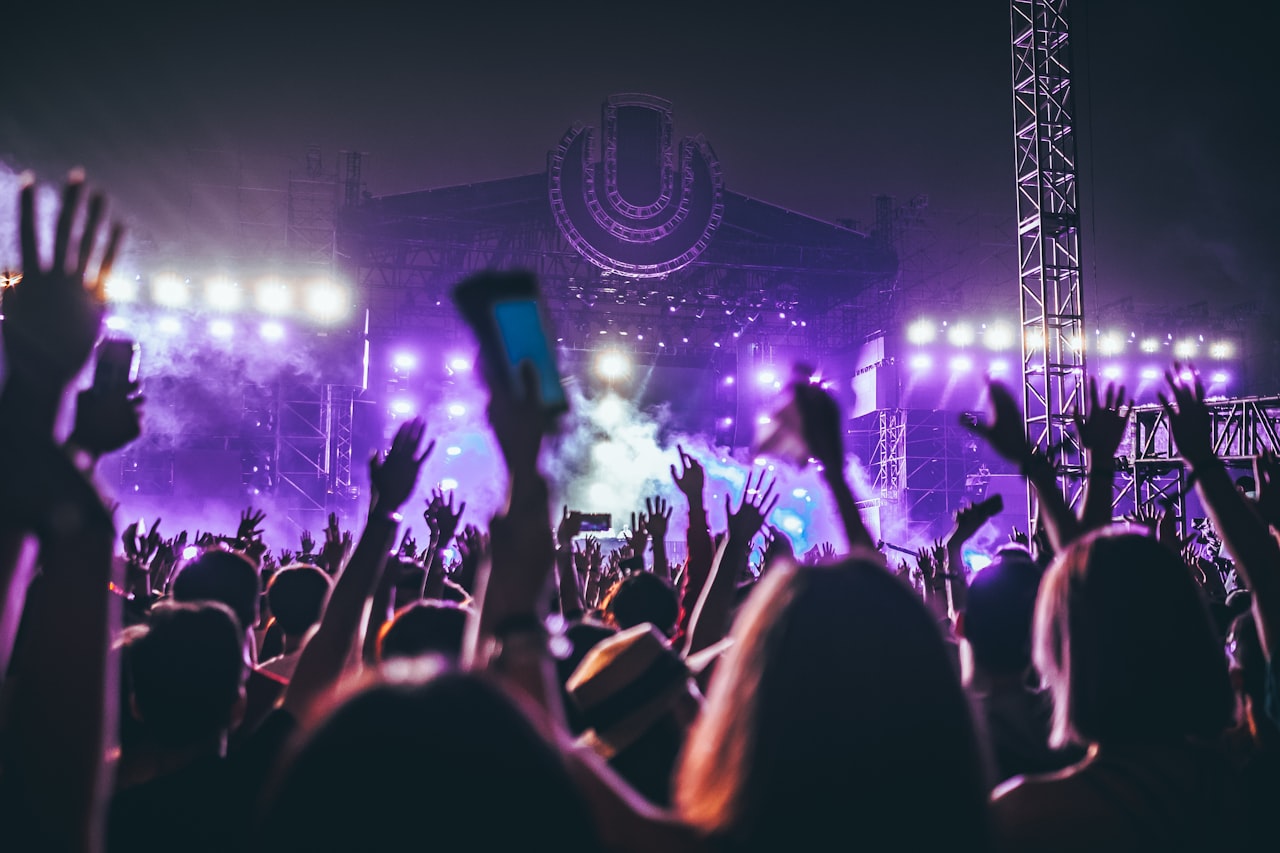
In 1954 jazz wasn't yet respectable, and someone put it on the water in Newport anyway. Seventy-two editions later, four stages spread through Fort Adams State Park against water views you will still be thinking about long after the music fades - collectors clutching programs they've kept for decades sitting on the grass next to first-timers who wandered in on a friend's word and left with a completely reorganized sense of what live music can do. Jazz here does not feel like a museum exhibit. Newport consistently books the artists pushing the music forward alongside the legends who defined it. There is no camping on-site, no re-entry, and no separation between the music and the water - you pack for the full day and you stay. The fact that this festival sells out with no pop crossover acts, no festival-season marketing blitz, and no sponsorship-driven brand activations is the entire quality signal. The market already answered whether it's worth it: 2026 tickets are sold out through the primary market, available only through fan-to-fan exchange on the DICE app. Weather at Newport is genuinely unpredictable - pack for 50 degrees and rain in the same bag as 90 and sun. The no-re-entry policy is real, so bring everything you need for a full day: a low chair or blanket for the lawn, sunscreen, layers, and food if you're budget-conscious. Use the Newport Jazz app for real-time stage maps and set times. Arrive early for popular sets; the main stage meadow fills quickly. Digital tickets via DICE only - no PDFs accepted. Gurney's Newport Resort is the closest hotel and books out months ahead. Since 1954 this festival has witnessed every evolution the music went through - bebop, fusion, neo-soul, experimental - and never stopped being relevant. Fort Adams, with water on three sides, is one of those accidental combinations of place and art that produces something greater than either element alone. It earns its place here for the same reason certain films earn a place in the canon: not because it is the loudest, but because it is the most correct. Tickets via DICE at newportjazz.org.
Aug 1, 2026
Free
LA Plaza de Cultura y Artes, 501 N…
If you have ever had to explain that yes, you are Black, and yes, you are Latino, and watched someone's face do the small confused thing — this was built by people who never once had to explain it to each other.
A diaspora running from West Africa through the Caribbean into Central and South America almost never gets a room of its own on this city's calendar, so a community made one and kept it free. Afrobeats, cumbia, and reggaeton on the stage. Dance showcases, art installations, panels on Afro-Latino identity, and a marketplace of Afro-Latino makers. The food tells the whole story on a single table: plantains beside jerk chicken beside tamales.
It takes place in a restored courtyard building on Main Street across from Union Station, one of the easiest venues in Southern California to reach without a car, on an August evening.
Bring the friend who has been waiting to see both halves of themselves in one room.
Jul 2, 2026
Free
453 S Spring St, Los Angeles, CA 9…
They believed the galleries in downtown's Historic Core deserved more foot traffic than the workweek brought them — and that designating one Thursday a month would let the art find the audience it couldn't reach alone. The Downtown LA Art Walk has been that Thursday since the community organized it.
On the first Thursday of each month from 6 to 10pm, the galleries, studios, and creative spaces along Spring Street and the surrounding blocks extend their hours and their welcome. The self-guided format is deliberate: you move at your own pace, follow what interests you, and let the neighborhood reveal itself without a docent or a VIP list. The mix of spaces ranges from established commercial galleries to working artist studios to project spaces that exist specifically for this kind of foot traffic.
The walk draws a cross-section of the city — art professionals, curious regulars, first-timers who heard about it from a friend. The street-level energy of DTLA after dark on a walk night is its own reason to be there.
Free. Every first Thursday, 6–10 PM. Gallery Row, Spring Street Historic District, Los Angeles (anchor: 453 S Spring St).
Jun 25 – Jun 28, 2026
From $299
Double JJ Resort, 5900 Water Rd, R…
The trees are part of the event. Electric Forest wraps the forest in light installations and puts four stages in the middle of it — four days at Double JJ Ranch in Rothbury, Michigan, where something that was already interesting becomes something harder to explain.
The first thing that surprises first-timers is that the forest is the stage, not just the setting. Interactive art installations appear between the trees. Performers wander the paths. Sound bleeds from multiple directions. The main stages are exceptional — Electric Forest books across EDM, jam bands, hip-hop, and electronic music with a curation that rewards genuine musical taste rather than just chasing the top of the streaming charts. But the forest after midnight is why people come back. Year after year, the return rate at Electric Forest is among the highest of any festival in the country.
Who is this for? People who want the festival experience to feel like being inside something, not watching something. Electric Forest rewards explorers. The itinerary you plan on day one is never the itinerary you live. If you surrender to the unstructured hours — the unexpected set you stumbled into, the art piece you found at 3am, the conversation that started because you were both standing under the same lit oak — that is when the festival delivers on its reputation.
Practical notes: Camping is central to the Electric Forest experience. Book early — specialty camping tiers sell out fast and the general campgrounds fill in. The Sherwood Forest is walkable from all camping zones. June in Michigan can swing from hot to cold overnight; layers are essential. Tickets are available through AXS with payment plans. Rain gear is non-negotiable — the forest floor gets soft.
Electric Forest earns its Nation's Best designation because it has solved a problem most festivals haven't: how do you create a sense of wonder in adults? The answer, it turns out, is trees and lights and music and four days of deliberate magic. Rothbury, Michigan. June 25–28, 2026.
The music lineup at Electric Forest spans electronic, jam bands, hip-hop, and bass music — curated with a specificity that rewards genuine musical curiosity. Past editions have featured Odesza, Zeds Dead, Big Gigantic, STS9, Subtronics, and dozens of acts that play the Forest before they graduate to festival headliner status. The discovery rate is exceptional. You will leave with five new artists on your regular rotation.
A spades table is where you find out who somebody really is. There will be one running all afternoon, loud, with a crowd three deep around it, while the DJ works from R&B into Afrobeats and the bay does that thing it does when the light drops behind the skyline.
This is the day San Diego's Black community takes the waterfront for itself — live performers and DJ sets from afternoon into the night, a marketplace of Black-owned businesses, artists, and makers, art installations, and food worth planning your appetite around. Organized by SD Melanin, strictly grown folks, and built so that the celebration and the economics happen in the same place on the same day.
Waterfront Park on Pacific Highway, with general admission and table service for groups who want to post up.
Text it to the cousin who keeps saying nothing ever happens in this city.
Jun 11 – Jun 14, 2026
From $435
Great Stage Park, 682 Burnett Road…
Four days on a 700-acre Tennessee farm, 80,000 people, and a lineup that has been staking claims about American music since 2002. Bonnaroo gets this right every June.
The experience at Bonnaroo is harder to explain than it is to feel. Walking into Centeroo — the central festival grounds — for the first time, you're hit by scale and warmth simultaneously. Multiple stages blast sound across the Tennessee heat. Art installations catch light at unexpected angles. Strangers hand you things with no expectation of return. The crowd skews eclectic: first-timers in bucket hats, veterans who've camped here fifteen years running, families with kids in tow, groups of friends who planned this trip for months. By midnight on the first night, the distance between those groups collapses entirely. Bonnaroo runs on a social logic that few festivals have cracked.
Is it worth it? If you've ever wanted to see five artists you love across four days without leaving a square mile — yes. If the idea of sleeping in a tent next to 80,000 people sounds more thrilling than inconvenient — yes. This is not a day-trip event. It rewards people who surrender to the full experience: camping, late nights, early mornings, the unplanned conversations that become the story you tell for years. Bring comfortable shoes, a portable charger, and a shade structure. The Tennessee sun is not subtle.
Before you go: buy tickets early — prices increase in tiers and the best camping spots are first-come. The festival grounds open days before the music starts; arriving early gets you better tent placement and lets you acclimate to the heat before show days. The main stage headliners are announced in January, but the discovery is in the mid-day sets on smaller stages. Water stations are free and plentiful — bring a refillable bottle. Car camping requires a separate pass. Cell service is limited on the farm, so download maps and schedules to your phone before arrival.
Bonnaroo endures because it is one of the few remaining American events that genuinely cannot be replicated by staying home and watching a livestream. The physical, social, temporal convergence of it — the fact that everyone there is also there — is the product. The music is the occasion. The experience is the reason. Four days, Manchester, Tennessee. June 11–14, 2026.
There's more here for you.
An account shows you art & culture events matched to your exact taste — not just what's popular.