Every Thursday· Next Oct 8
Bayard St & Garnet Ave, Pacific Be…
The sun dropped behind the Pacific ten minutes ago and the salt air is still warm. Fire pits are already lit at the corner of Bayard and Garnet, and somewhere between the dumpling stand and the taco truck a guitarist is playing something that makes you walk slower than you meant to.
PB Night Market is Pacific Beach's Thursday night ritual — a curated weekly market running 5 to 9:30 PM with nine to twelve rotating food vendors, live music, lawn games, and the kind of firepit seating that turns strangers into conversationalists. Curator Jay Michaels launched it in February 2026 and intentionally chose Thursday to fill the gap between the Tuesday PB Farmers Market and the Wednesday OB Farmers Market. The result is the night Pacific Beach exhales into the weekend a day early.
Vendors rotate weekly, which means regulars come back to discover what changed. The crowd is beach-local plus the occasional rideshare from North Park. The vibe is backyard party energy with better food and no cleanup. One hundred fifty steps from the ocean — close enough to hear it if the music pauses.
Every Thursday, 5 to 9:30 PM. Corner of Bayard and Garnet in Pacific Beach.
We keep telling stories about running away with the circus because some part of us never entirely stopped wanting to. This one takes that ache and puts real acrobats in the air above it.
A young man loses everything, jumps a moving train in the dark, and lands inside a Depression-era traveling show full of danger and wonder and one impossible love. The touring production folds genuine aerialists and hand-balancers into the storytelling, so the spectacle is not a metaphor for anything — it is physically happening over the actors' heads while they sing. Seven Tony nominations, adapted from the novel everybody's mother read the same year.
Under the gilded ceiling on Hollywood Boulevard, one night in September, and fine for kids around eight and up.
The people who still look twice at a passing train will feel every minute of it. Take the one you know does that.
Aug 27 – Sep 8, 2026
18
Minnesota State Fairgrounds, 1265 …
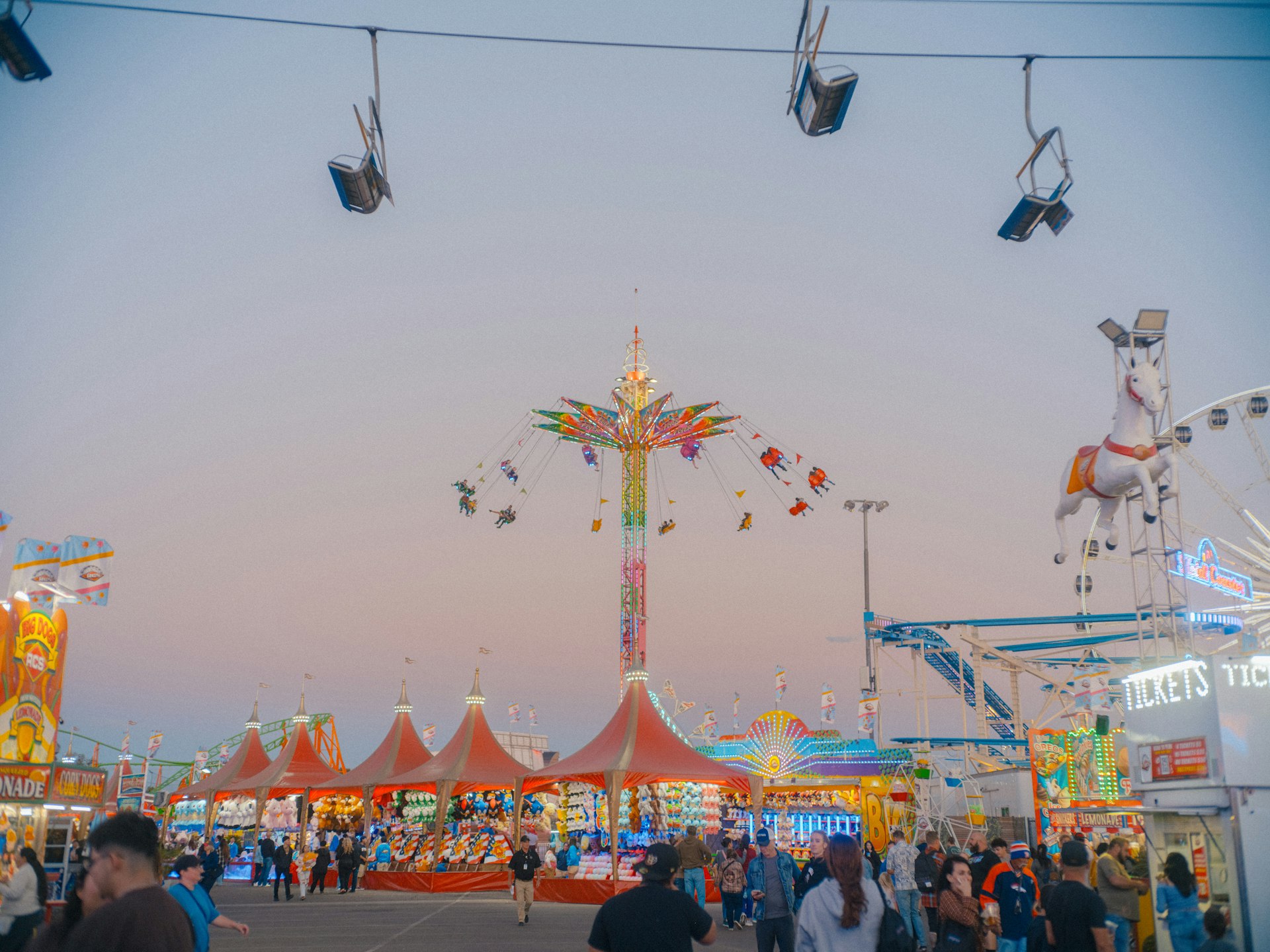
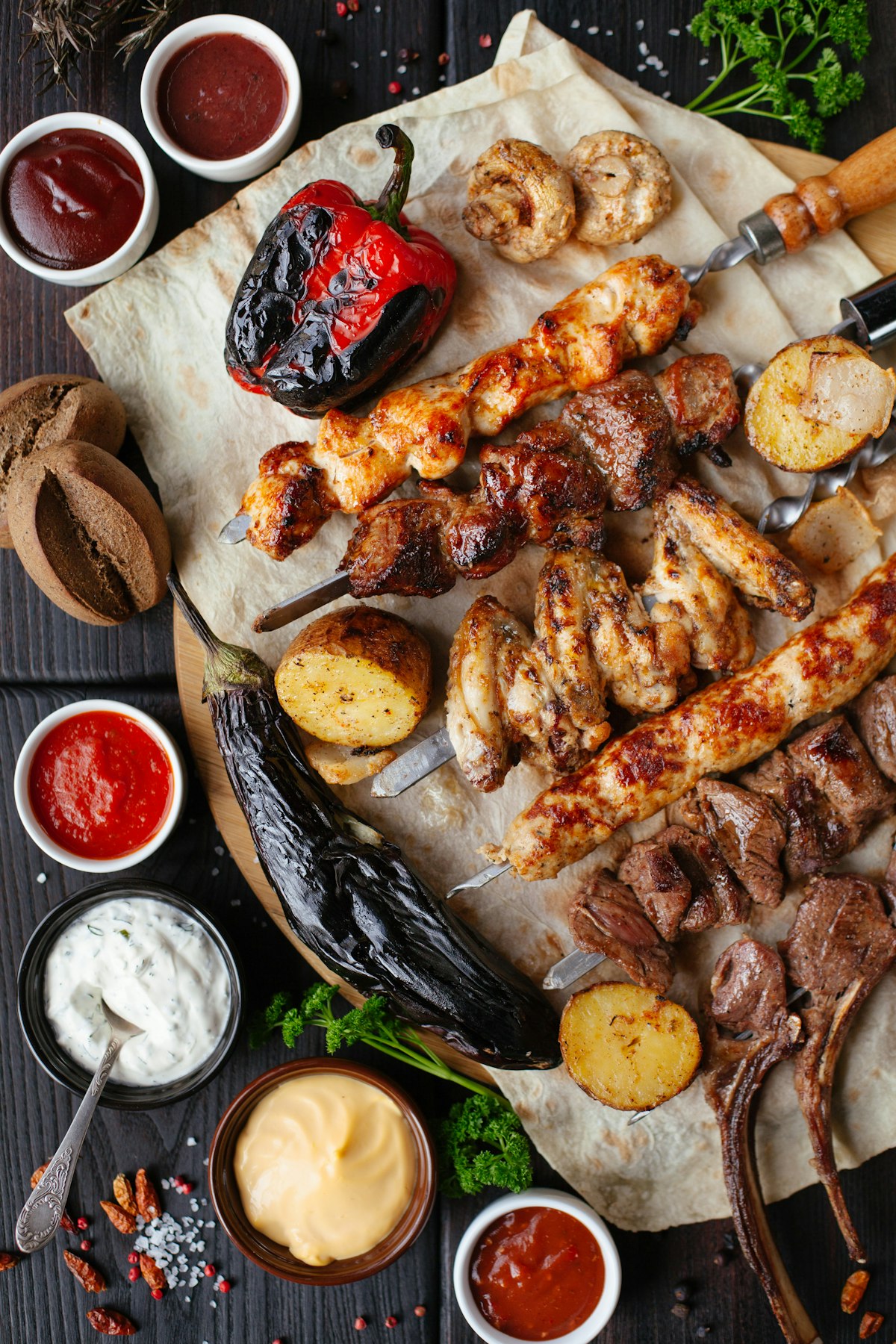
If you’ve ever wondered what makes a state fair worth traveling for, this is the answer. The Minnesota State Fair runs twelve days. Two hundred thousand people show up every single day. Minnesota's state fair has an atmosphere that cannot be manufactured. The fairgrounds sit on 322 permanent acres — exhibition halls, livestock barns, a racetrack, a Grandstand that hosts national music acts, and the famous food vendors who line every street. More than 70% of the food is available on a stick (that is not a metaphor). The Agriculture-Horticulture Building hosts produce competitions that Minnesotans train years for. The Creative Activities Building displays needlepoint and woodworking next to quilts of genuine museum quality. The livestock barns have actual farming families. Nothing about the Minnesota State Fair feels like it was designed for tourists — it feels like a community that allowed visitors to come watch, and is genuinely happy you're here. This is for anyone who has lived primarily in cities and genuinely wonders what American agricultural and working-class culture looks like when it isn't staged for outside consumption. The Minnesota State Fair is not a theme park version of rural life — it's where the farming community of the upper Midwest gathers alongside the urban Twin Cities metro, and both groups are completely at home. It is worth the trip from anywhere in the country. The state fair shuttle system is the only sane way to arrive — park at satellite lots and take the bus. Walking the fairgrounds takes a full day minimum; wear comfortable shoes. The food situation is comprehensive and genuinely excellent: Sweet Martha's cookies, cheese curds, pronto pups, walleye on a stick, and an ever-expanding list of experimental annual creations. Buy Grandstand concert tickets separately — the lineup goes on sale in spring and sells quickly. The free stages offer entertainment every hour. Check the schedule in advance and arrive early for popular demonstrations. Two million visitors over 12 days — and somehow it doesn't feel overwhelming because the fairgrounds were built for exactly this. This is the American summer in a single experience: food, music, agriculture, competition, family, and the warmth of a community that has gathered like this for over 160 years. Admission and schedule at mnstatefair.org. August 27 – September 7, 2026, Falcon Heights (St. Paul), Minnesota.
The loukoumades come out of the fryer into a metal bowl and get tossed with honey and cinnamon while you stand there watching, and the woman doing the tossing has been doing it since before you were born.
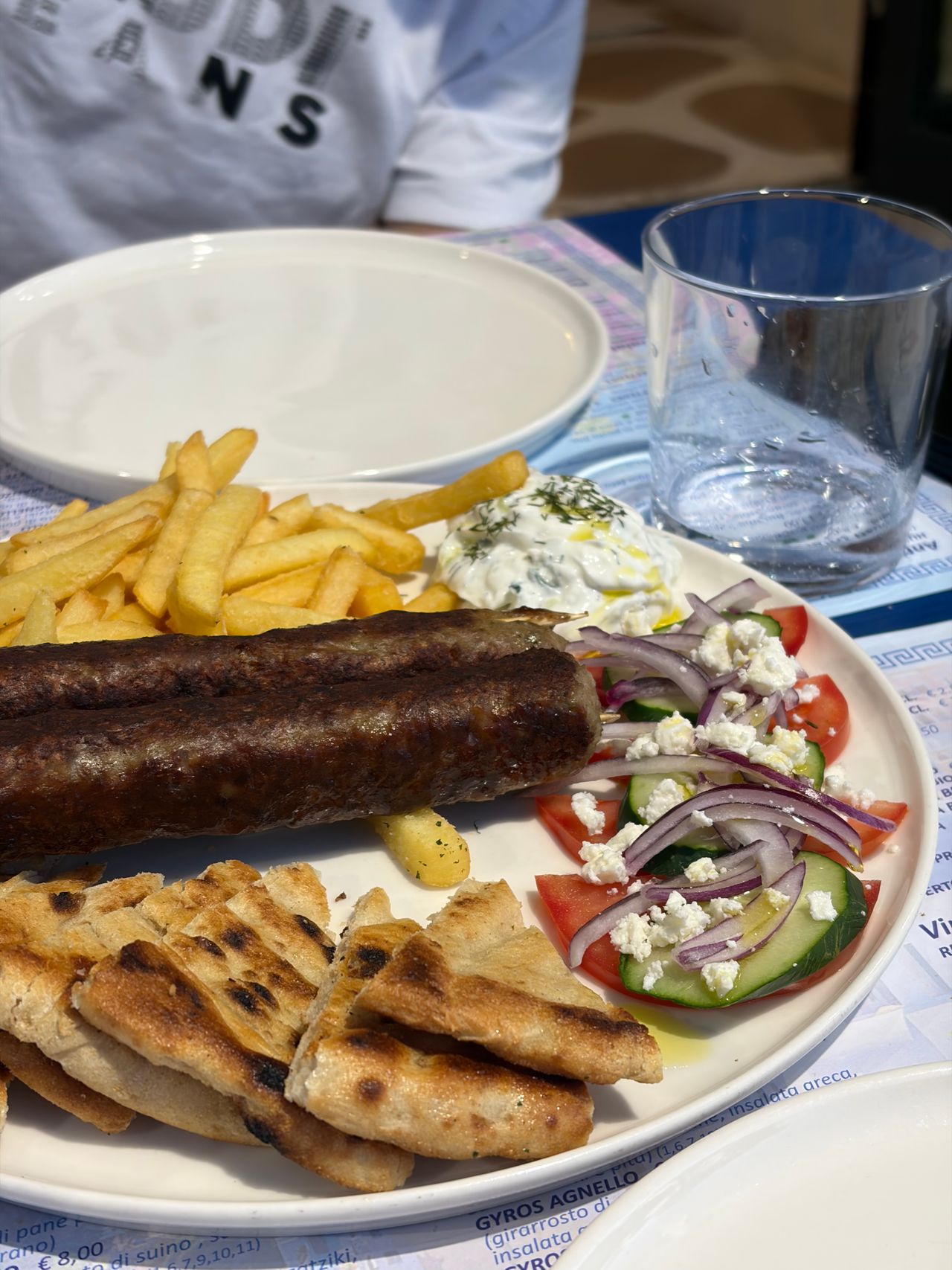
For three days a church community in Long Beach turns its grounds into a village block party. Spanakopita, souvlaki, gyros, baklava, galaktoboureko, all of it out of a kitchen that has been making these exact dishes for decades and moves a line faster than any restaurant in the city. Folk dance groups perform regional dances on the outdoor stage, and the synchronized circle dances are the part everybody films. Then they start pulling people out of the crowd, which is how you end up inside one, holding two strangers' hands and doing the steps wrong.
Labor Day weekend, small admission at the gate, kids free, parking on the surrounding streets.
Bring the friend who claims they do not dance. They will.
Inland, the Valley hits triple digits over the long weekend, and everyone who knows better drives to the Bluffs instead, where the ocean has been quietly running its own climate all summer. You eat chili in a sea breeze out of what feels like spite.
This is one of the oldest outdoor food events on the California coast, and the competition is more serious than the setting suggests. Traditional red, salsa, and specialty divisions. Celebrity chefs and restaurant kitchens entered right alongside neighborhood teams who have been adjusting the same recipe for decades and will tell you exactly what they changed this year. You vote in People's Choice all weekend, which obligates you to keep tasting.
Around it: carnival rides, a beer and spirits garden, artisan vendors, kids activities, and music across multiple stages, with PCH and the Santa Monica Mountains behind all of it. The highway backs up, so come early or take the bus.
Go with the friend who insists they make the best chili. Let the scoreboard settle it.
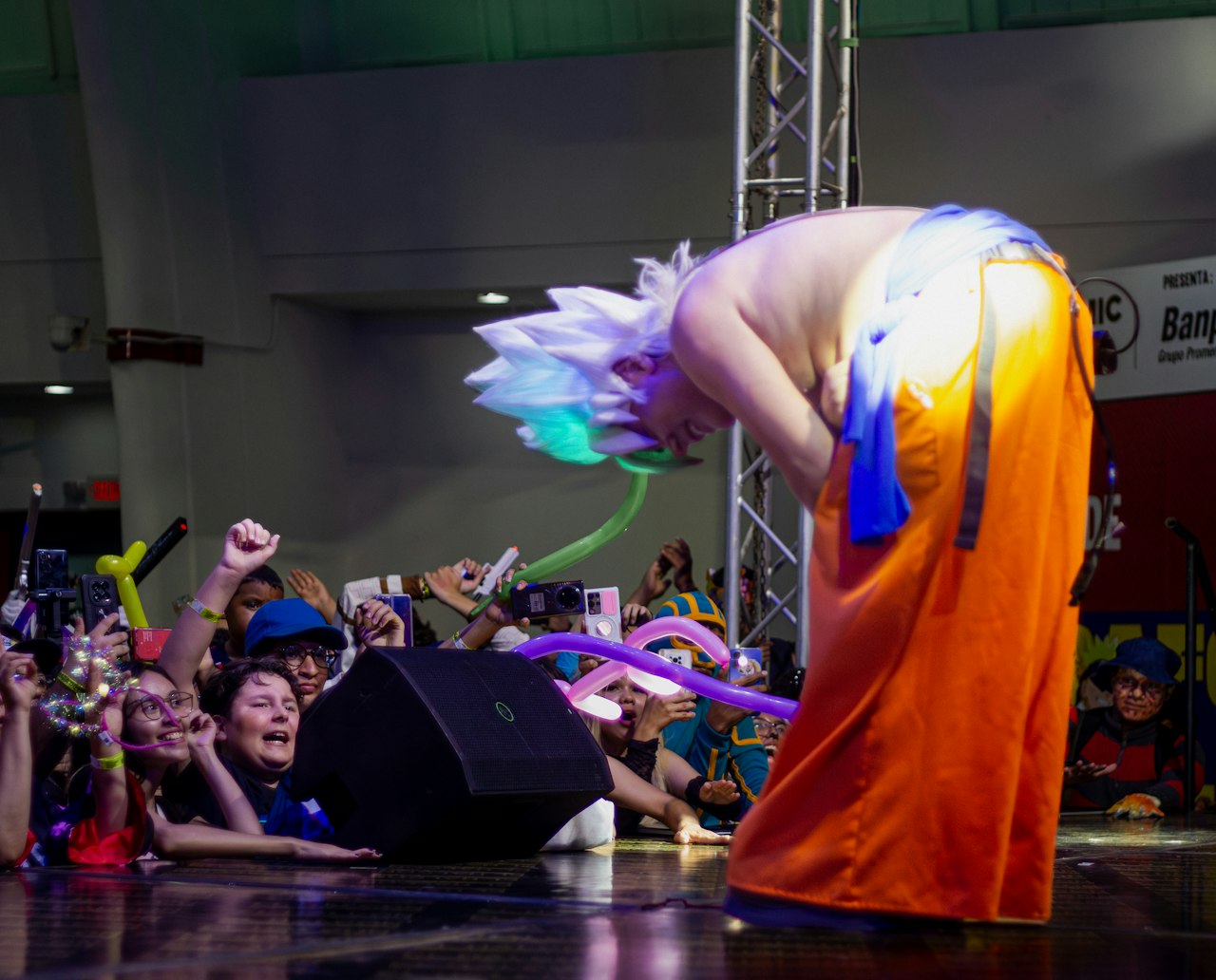
Dragon Con fills five hotels in downtown Atlanta simultaneously over Labor Day weekend. The Saturday parade shuts down streets. Ninety thousand people across five days — the largest multi-genre fan convention in the United States. The hotel structure is part of the experience. Dragon Con takes over the Marriott Marquis, Hilton, Hyatt, Westin, Sheraton, and AmericasMart simultaneously — connected by skywalks, each with its own programming and atmosphere. The Marriott atrium, famous for its multi-story interior balconies, fills with costumes and spectators until 4am. The Hyatt has the gaming rooms. The parade through downtown Atlanta on Saturday morning, 90,000 people in costume marching through the streets, is a public event that draws spectators who've never bought a badge. Dragon Con is worth it for science fiction and fantasy fans who want density over prestige. The programming is fan-driven and runs across 70+ tracks simultaneously: Star Trek, Star Wars, gaming, anime, horror, costuming, comics, tabletop RPG. You will not see the mainstream film studio Hall H style announcements that SDCC gets, but you will find panels and conversations led by creators and experts who are genuinely passionate rather than promotional. The celebrity guest list — actors, authors, musicians, artists — is extensive and accessible. Practical notes: Pre-register well before the event; badges for Labor Day weekend routinely sell out. The connected hotel system means everything is walkable in climate-controlled comfort — a feature in Atlanta in September. Book hotel rooms in the official block early; they sell in January. The Dragon Con parade requires no badge and is worth attending on its own. Atlanta, Georgia. September 3–7, 2026. Dragon Con was founded in 1987 by a group of Atlanta gaming enthusiasts and has never been acquired or corporate-ized. That independence is visible in how it runs: the programming is fan-proposed and fan-led, the celebrity guest selection reflects genuine fan interest rather than studio promotion schedules, and the convention's identity is remarkably consistent despite 90,000 attendees. This is rare at events of this scale. Dragon Con remains, after nearly four decades, a fan convention that happens to be enormous.
The alarm goes off before dawn and you do not hit snooze. That is how you know it is swap meet day.
By first light the lots are already moving — vendors laying parts and signs and memorabilia across folding tables, and the people with flashlights and cash working the rows before the sun clears the arena. Whatever gets found in that first hour is what everybody else spends the rest of the day asking about.
This is not a concours. It is a parking lot full of people who speak the same language: carburetors, matching numbers, barn finds, the one that got away. Classic trucks beside lowriders beside a Camaro somebody drove down from Riverside to show what two winters in a garage produced.
Walk the rows and listen to the owners; it is the best accidental education in automotive history available anywhere. Cash is king at the swap tables — the good stuff does not wait for Venmo.
Go early. Come home with something you did not know you needed.
Fourteen countries set up kitchens on the same four blocks, and for three days the whole town smells like something your grandmother would have made if your grandmother had been from everywhere at once.
It runs on a principle most food festivals abandoned decades ago: no entrance fee, no VIP section, and no sponsor telling you which direction to walk. You show up. You eat Brazilian food beside a stage playing Irish music beside a booth selling Greek pastries. The line for the gyros touches the line for the lumpia touches the line for the schnitzel. You lose a child in the kids' street and find them covered in face paint holding a stick of something fried.
Old Towne Orange, the historic plaza at the center of it, eight stages running continuously, crafts booths down every street. Bring cash — plenty of vendors take nothing else.
Come hungry, and bring the person who claims they have already tried everything. Watch that hold up for about ten minutes.
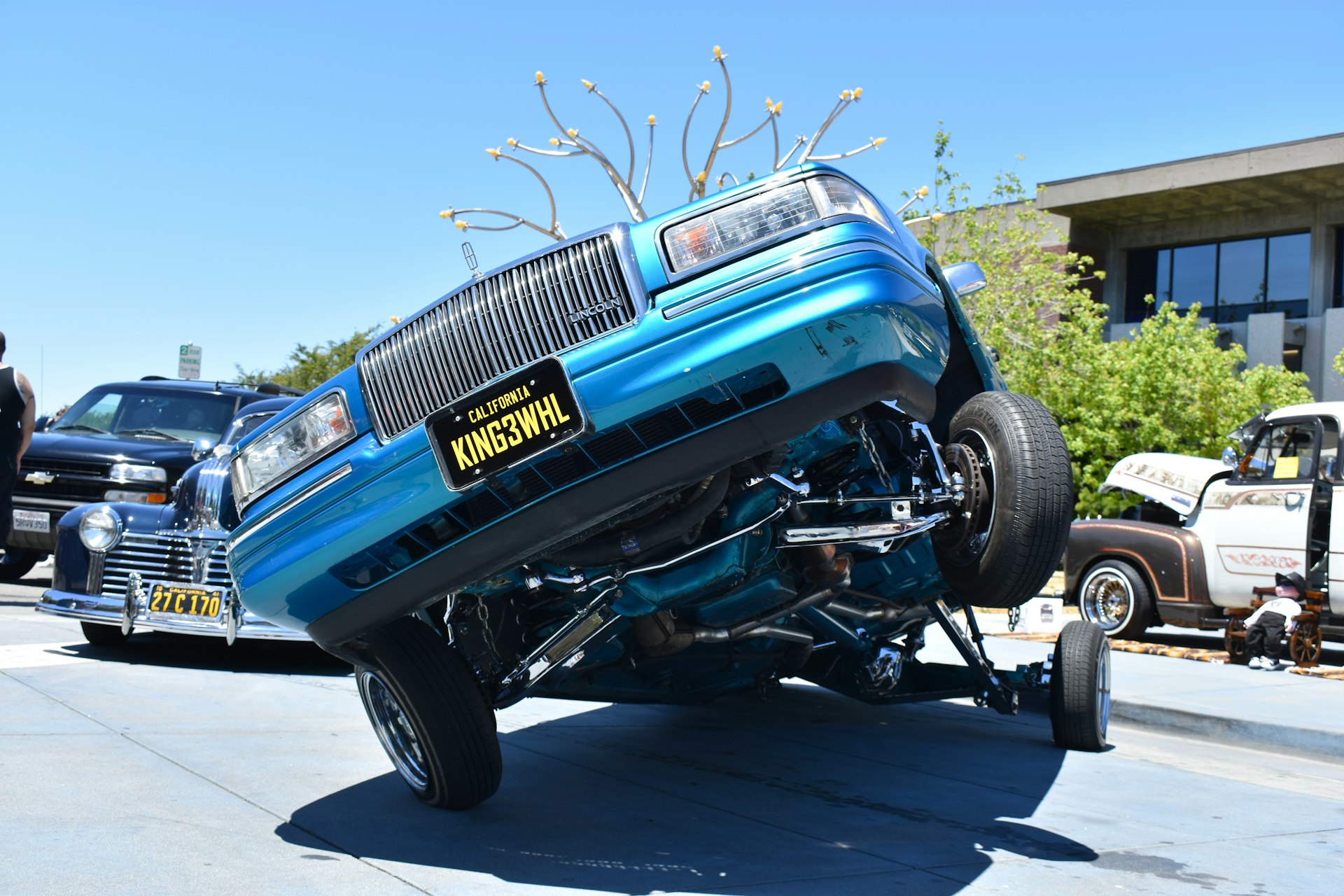
The hydraulics hit and the whole block turns its head.
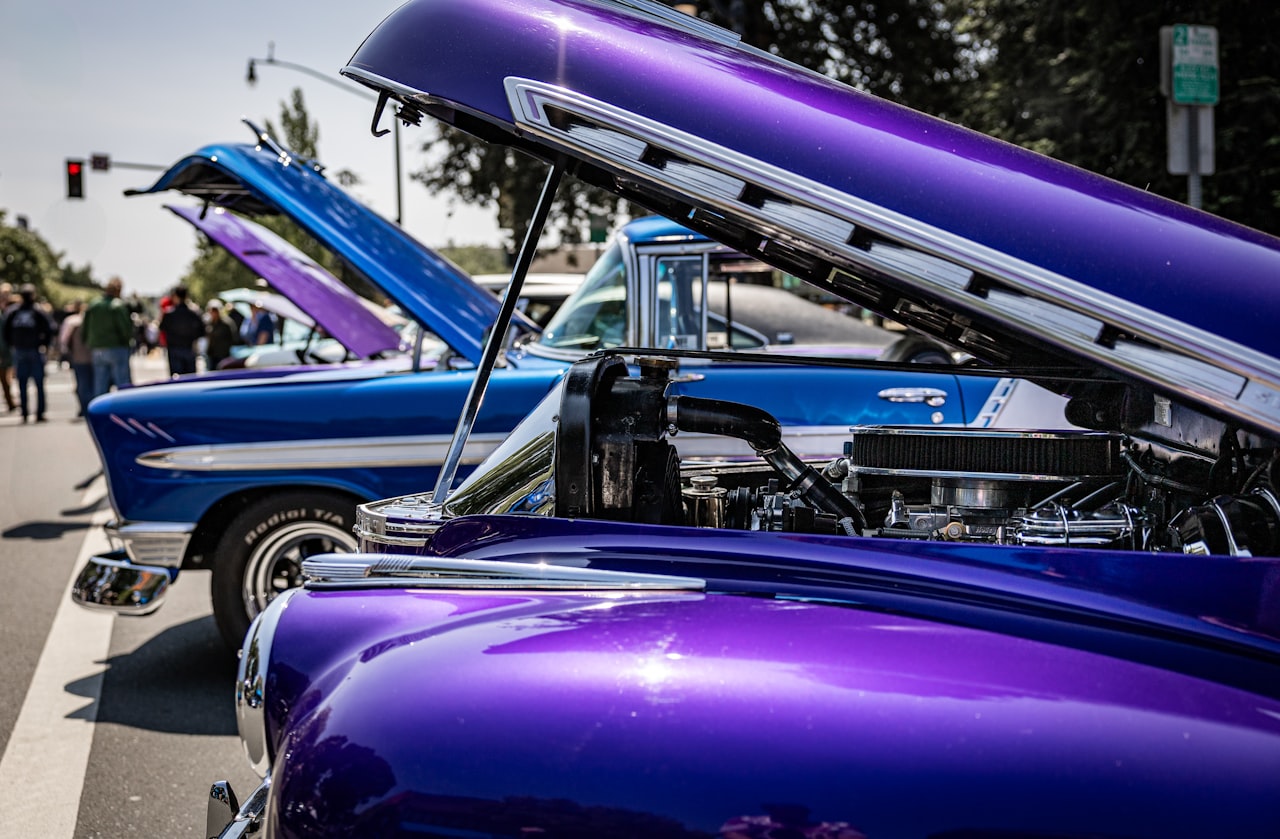
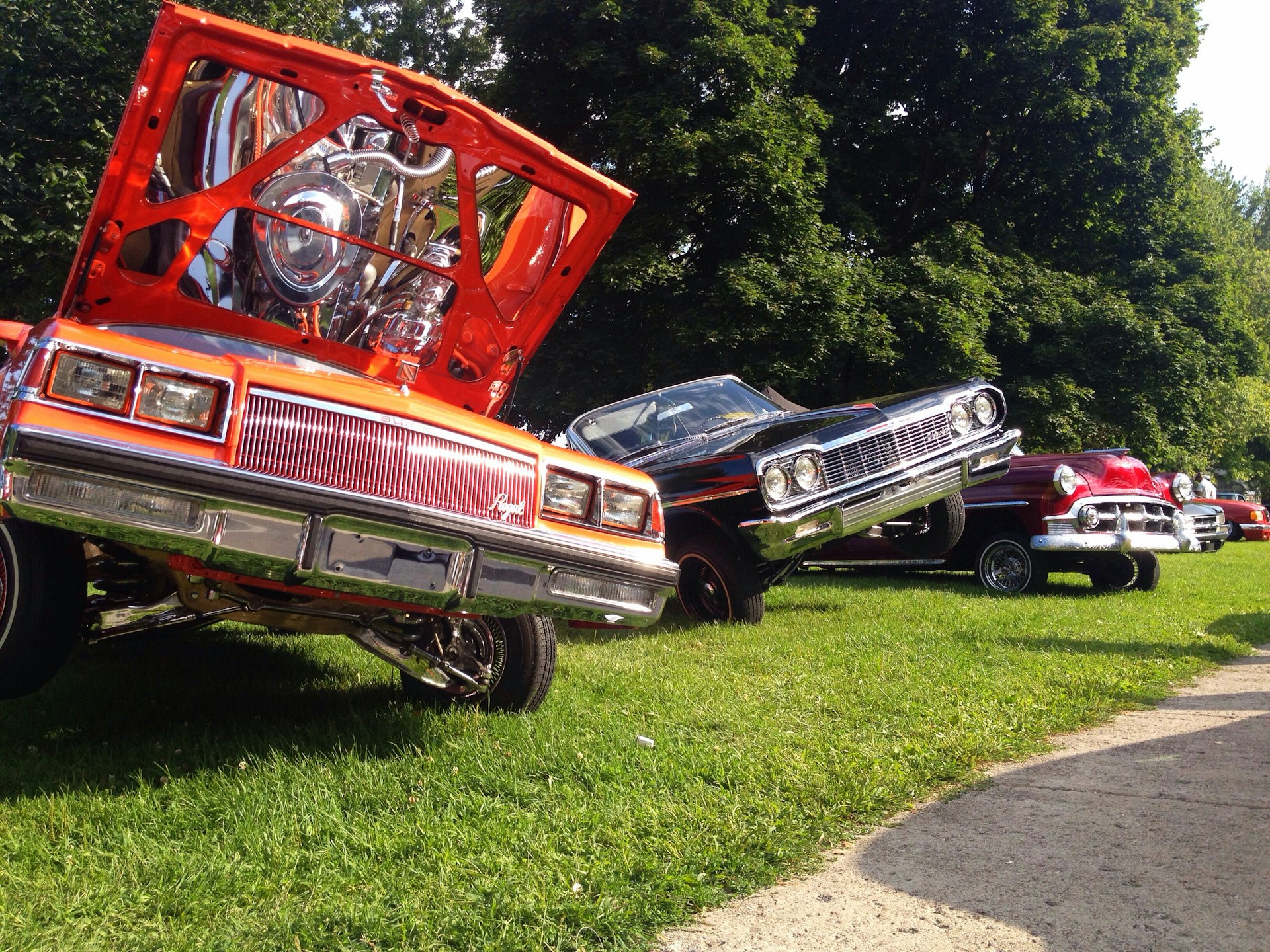
The San Diego Lowrider Car Show & Cruise rolls through the city on September 6 for a free, end-of-summer celebration of Chicano culture, music, and the art of making a car dance. Lowriders from across SoCal line up — candy paint glowing, chrome wire wheels catching the afternoon sun, interiors upholstered in velvet patterns that took someone's uncle six months to finish. The cruise brings them through the streets in formation, hydraulics popping, sound systems competing, families lining the route with lawn chairs and coolers.
This is not a car show where you stand behind a rope. This is the neighborhood flexing — a tradition that stretches back generations in San Diego's Chicano community, where building a lowrider is an act of artistic expression, family pride, and cultural continuity. The music shifts between oldies, cumbia, and Chicano rap. The food is homemade. The kids are on someone's shoulders.
Free admission. Free to join the cruise. September 6, 2026. 12:30 PM – 5:00 PM. San Diego.
Sep 5, 2026
$100-200
305 Harrison St, Seattle, WA 98109
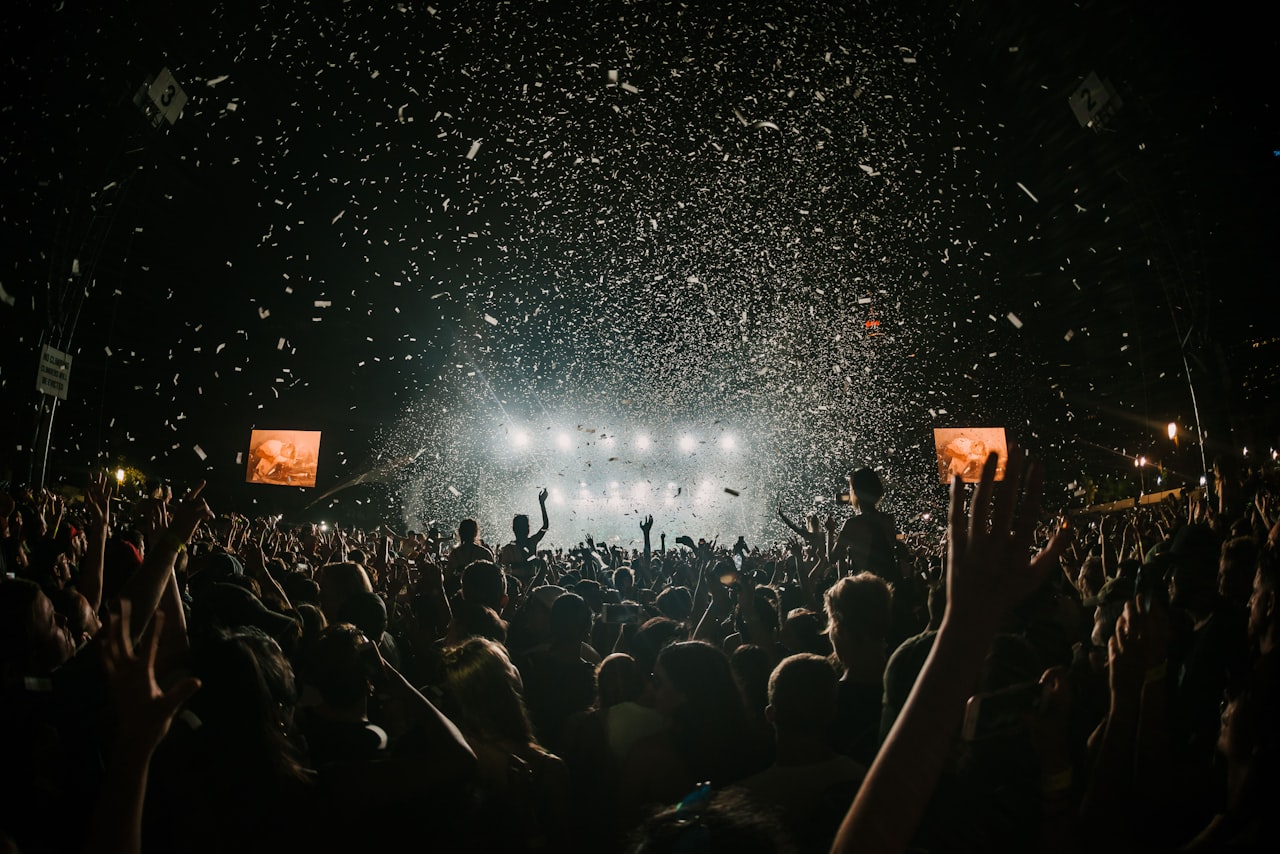
Seattle invented a particular strain of melancholy in popular music, and every Labor Day weekend, the city gathers at the foot of the Space Needle to celebrate the fact that it never really stopped. Bumbershoot is one of the oldest urban arts and music festivals in North America — running since 1971, which means it was hosting bands before most festivals existed as a concept, before there was a festival industrial complex, before anyone charged four figures for a weekend pass.
The 2026 edition brings Death Cab for Cutie back to their hometown just after releasing their new album I Built You a Tower, and if you have ever listened to Transatlanticism on a rainy afternoon and felt something rearrange inside your chest, you already know why that homecoming matters. Turnstile headlines Saturday with the kind of energy that turns a seated crowd into a moving one within thirty seconds of the first chord. Bikini Kill is on the bill, which means riot grrrl is not a museum exhibit in Seattle — it is still playing live sets in the city where it was born. De La Soul brings golden-era hip-hop that sounds like it was recorded in a better timeline. Orville Peck does country in a fringed mask and makes people who have never considered a honky-tonk reconsider everything they thought they knew about the genre.
The full lineup spans indie rock, hardcore punk, electronic (Chase & Status), feminist punk, and local voices from Seattle's hip-hop scene — Travis Thompson, Oblé Reed, emerging artists who are still playing rooms small enough to make eye contact with the front row. This is a lineup where every genre seems to touch the one standing next to it.
Bumbershoot is not Coachella. There are no influencer tents, no brand activations disguised as art. Children under ten are free. The festival spans two days at Seattle Center — September 5th and 6th — doors open at 10:59am Saturday and 12:30pm Sunday, and the stages close at midnight. Tickets are available on AXS and Ticketmaster. The vibe is a city that still believes live music is a public good, not a luxury product. If your record collection somehow holds both Death Cab and De La Soul — who can hear Bikini Kill and Chase & Status on the same weekend and feel like both belong — this was built for exactly that person, in exactly the right city.
Sep 5, 2026
Free
Memorial Park, 85 E Holly St, Pasa…
A band shell sitting dark for years is its own kind of grief, a structure built for a sound it stopped making, in the middle of a park everybody still walks through.
The Gold Shell is playing again. The arched stage at the center of Memorial Park held summer concerts for generations of Pasadena before it went quiet, and this is the season it goes back into regular use: a run of free outdoor shows across the summer, genres rotating every few weeks through pop, rock, jazz, blues and Latin, so the audience assembles from the whole neighborhood instead of one slice of it. Blankets, low chairs, kids running the perimeter, no reserved section and no dress code.
Holly Street in Old Pasadena, free, walkable from downtown and a short walk from the Gold Line.
Text it to whoever you used to sit in a park with. That is the entire ask.
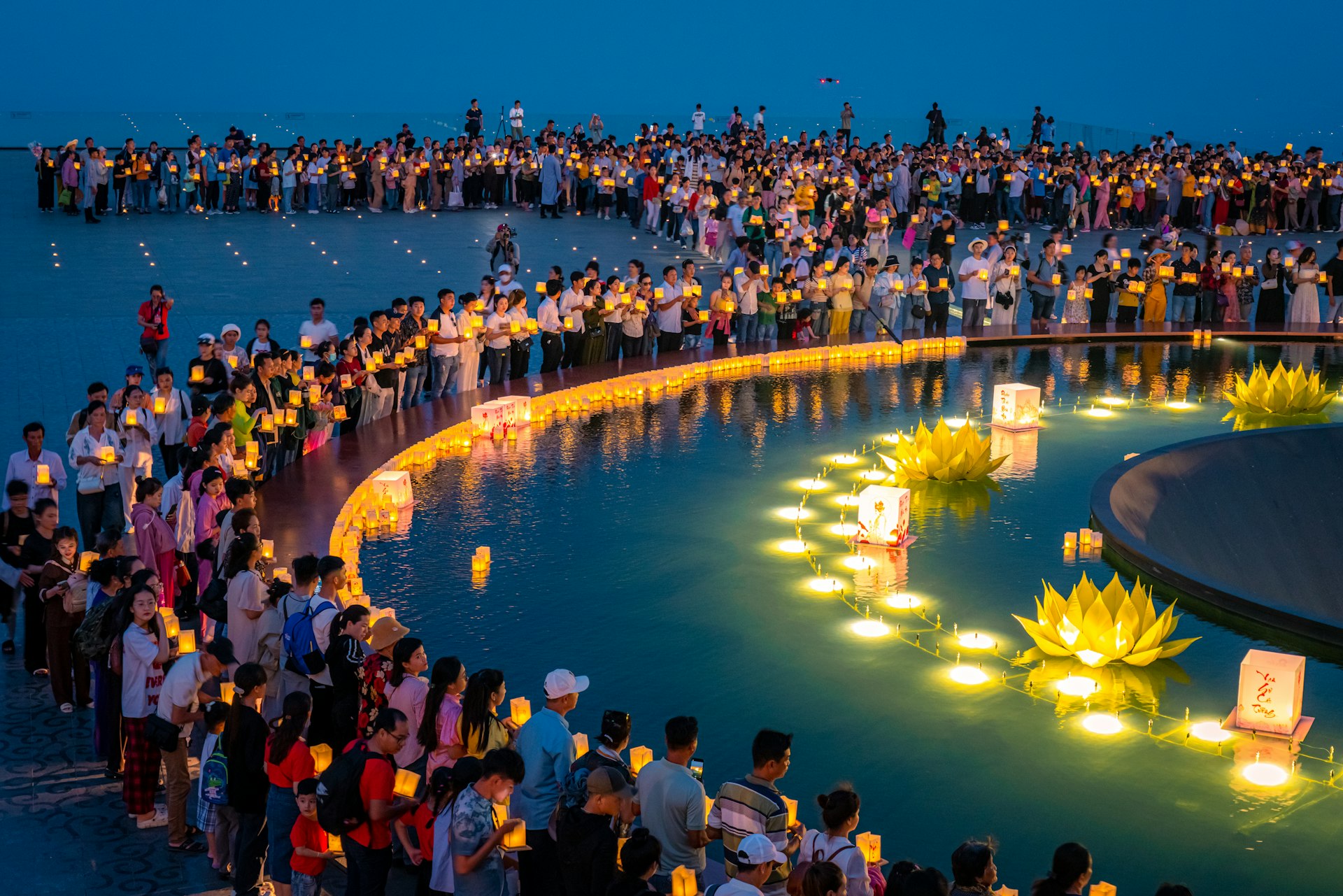
The sky is doing that thing it does in the Inland Empire in September — going from white-hot afternoon to bruised purple in about twenty minutes — and by the time the lanterns hit the water, the whole park has gone still in a way that a thousand people standing together almost never manage.
You get a lantern kit when you walk in. An LED candle. Markers. The rest is yours — a name, a wish, a drawing your kid made while sitting cross-legged on the grass. When the launch window opens at 7:30, you set it on the surface and let the current take it. For a few minutes, nobody is looking at their phone. Nobody is talking about anything that happened before they got here.
The rest runs like a proper festival — food trucks along the main path, a DJ keeping the energy moving — but the launch is the thing. The part where a field of floating lights becomes the only light source in the park, and every one of them started as a blank piece of paper in someone's hands an hour ago.
Gates 4:30 PM, launch 7:30–8:30. Rancho Jurupa Regional Park, Jurupa Valley. Tickets include the lantern kit.
Sep 5, 2026
Varies
Los Angeles Convention Center, 120…
Ask the man standing next to the car who started the build and you will get an uncle, a garage, and a decade. That is what outsiders miss walking this floor: every candy panel, every airbrushed hood, every set of wire wheels is a household's worth of patience handed down through a neighborhood.
Hundreds of them come here to be seen, indoors, so weather never gets a vote. It is not a static show either. The hoppers bounce on a schedule, the systems hit hard enough to feel in your sternum, and the culture is switched on from open to close. Custom trucks, motorcycles, bicycles built to the same obsessive standard. Trophies handed out all day for everything from paint to hydraulics.
Downtown at the convention center, a full day, parking in the structures on Pico and Figueroa.
Come early. The floor is deep, and the best conversations happen standing next to the cars.
Hydraulics are not a modification. They are a sentence. Every bounce says the same thing: I built this with my hands, it moves when I tell it to, and nothing on a dealership floor is ever getting close.
This one closes out the year's tour, which means the builds arriving downtown have been chased all season. Candy paint that took six months to lay down. Interiors stitched by somebody's uncle who learned it from somebody's grandfather. Chrome polished until it reflects an entire aesthetic philosophy back at the room. The competition is real and the trophies matter, but the feeling on the floor is closer to a homecoming, a whole culture showing up in one building to look at itself.
The convention center on Figueroa, a full day in September.
If you have ever wondered what it looks like when craftsmanship becomes identity, the answer is here in metalflake, and it will talk to you if you ask.
Before the breweries and the housing tracts, this was vineyard country. The town has not forgotten, and once a year it says so out loud in its oldest park.
What happens there is a time capsule that refuses to be precious about itself: live music on the main stage, handmade crafts from local artisans, food running from tri-tip to tamales, wine tasting for the adults and grape juice for the small ones, and barrels set out for stomping. Watching a grown adult attempt that for the first time is worth the trip on its own. The grape-growing heritage here runs more than a century, and this gathering has honored it for most of that time — which is why the crowd is full of neighbors who have been coming since they were the kids sprinting between craft booths.
A free afternoon in historic downtown Escondido.
Bring your mom. She will find three things she cannot leave without.
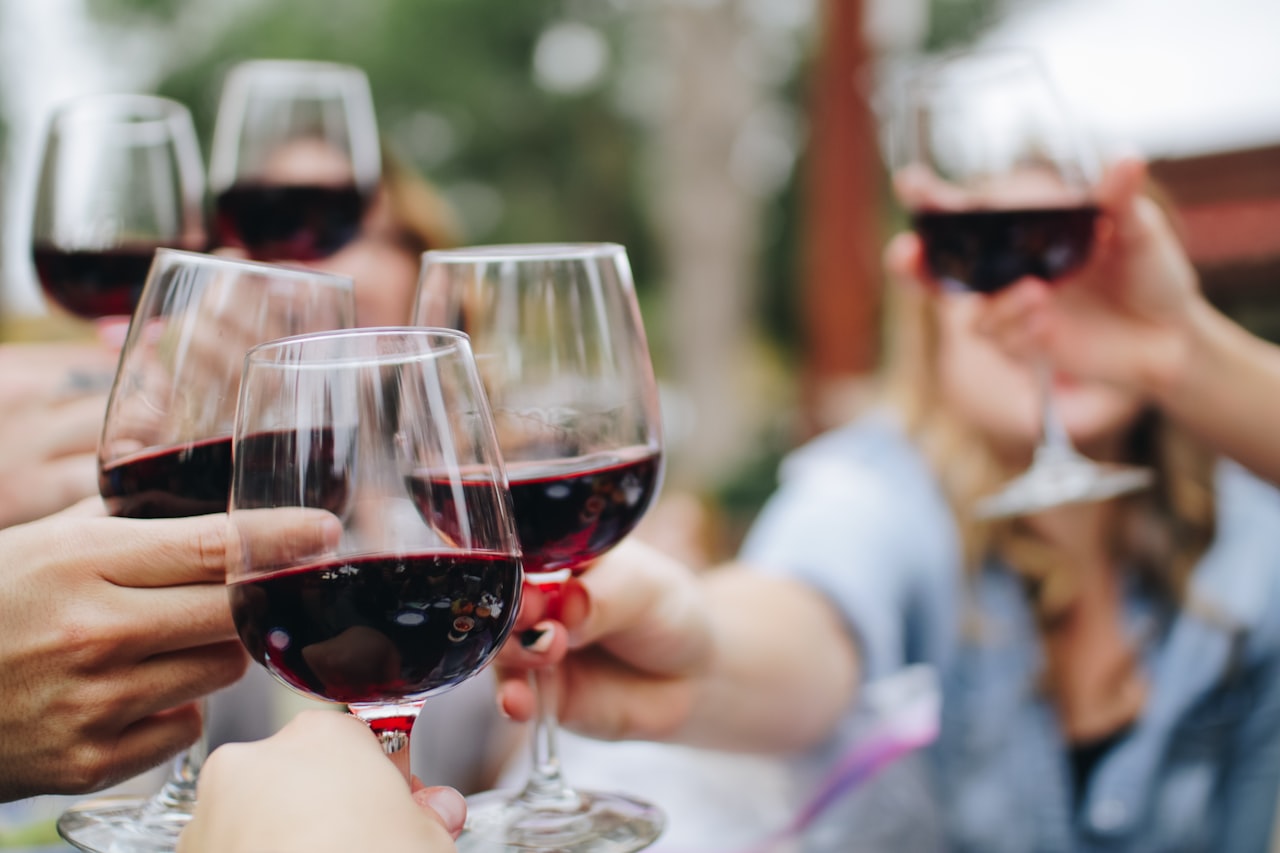
The coasters were the plan. Then you walked past a booth pouring a hazy IPA from a San Diego brewery you have been meaning to visit for two years, and an oompah band was playing next to the penguins, and somebody in lederhosen handed you a card with twelve punches on it, and the rides quietly became a secondary consideration.
On weekends from late summer into early fall the park turns into an open-air tasting room — more than a hundred domestic and California craft pours, hard kombucha for the sober-curious, wine and cocktails for people who never liked beer anyway, and food pairings built to match rather than absorb. Costumed performers wander the Arctic Plaza looking entirely unbothered by the penguins.
Sampler tiers are sold on top of regular park admission, Friday through Sunday only.
This is the one stretch of the year when the best reason to come is neither the animals nor the coasters. Bring somebody whose taste runs opposite to yours and trade sips.
You drop your name in a bucket, and fate decides whether you read tonight — in front of two hundred strangers who showed up on a Tuesday to hear exactly that. That's the deal at the longest-running spoken-word open mic in Los Angeles. Dante Basco started it in his living room in 1998 with Ron 'Shihan' Van Clief, Devan 'Poetri' Smith, and 'Brutha' Gimmel Hooper, and Da Poetry Lounge has run every Tuesday since, now at Greenway Court Theatre on Fairfax.
This is the room that produced half of LA's spoken-word generation — Saul Williams, Beau Sia, Jamie DeWolf, in their different decades. The third Tuesday of every month is the slam: same room, real stakes. The rest of the time it's open — you sign up, you wait to hear your name, and whether you kill or freeze, the room holds you either way.
Doors at eight, bucket at eight-thirty, mic at nine. Five dollars for open mic, ten for slam, cash only, all ages. Some of tonight's names have already been called. Some of them haven't.
Aug 30 – Aug 31, 2026
Mission Beach, San Diego, CA 92109
You find out about it from someone who went last month — that is the only way anyone finds out. No venue, no ticket booth, no marketing budget: just a projector, a screen on the sand, and the Pacific close enough that you can hear it between scenes. Beach Movie Night is about as genuinely word-of-mouth as San Diego events get.
The film is chosen by community vote on Instagram and projected on the beach after dark, free to attend, with fire-pit energy and the ocean for a soundtrack. The film changes every edition. The beach stays the same. Send this to the friend who is always trying to find the thing nobody else knows about.
July and August editions run on Saturday evenings at Mission Beach. Exact dates and film are announced via @beachmovienightsd on Instagram. Show up as the sun sets, bring a blanket and something to eat, and know that the best seats on the sand go early.
There's more here for you.
An account shows you family & community events matched to your exact taste — not just what's popular.